
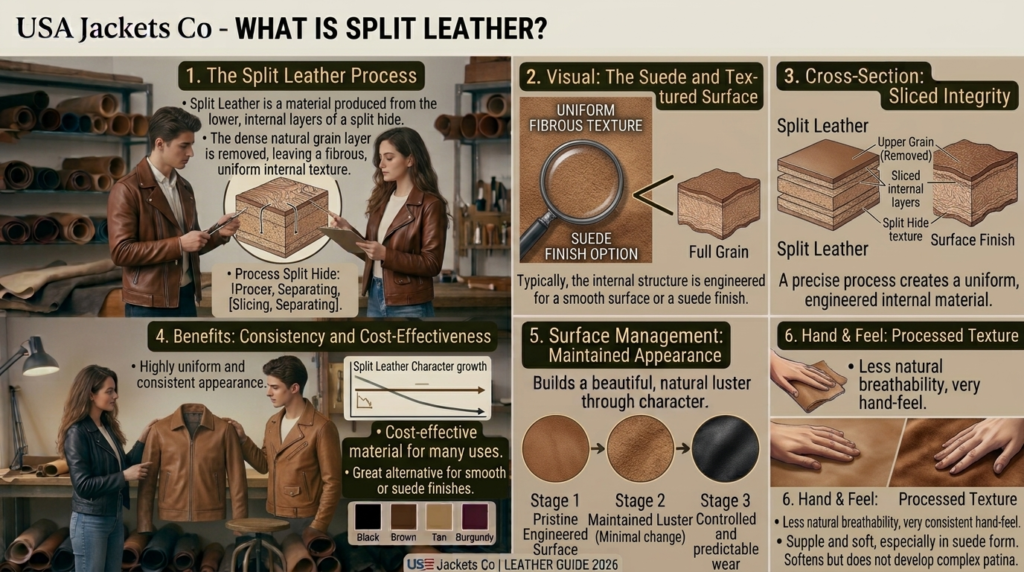
Split leather is made from the lower layer of an animal hide after the upper grain layer has been separated. It is real leather, but it has a different structure and surface from full-grain or top-grain leather. Depending on how it is finished, split leather may have a soft suede-like nap, or it may receive a coating and an embossed pattern that gives it a more uniform, grain-like appearance.
For a jacket buyer, the important question is not whether split leather is automatically good or bad. It is what kind of split leather is being offered, how its surface has been finished, and whether the finished garment suits your budget, style and expected use. This guide explains the material in practical terms so you can assess a product description with confidence.
What is split leather?
A hide has a natural outer grain surface and deeper fibrous layers beneath it. During leather production, a tannery can split a hide horizontally into layers. The upper section retains the grain surface. The lower section, which does not have that original grain face, is known as split leather. Its thickness and characteristics depend on the original hide and how the splitting is carried out.
Split leather is not a synthetic substitute. It comes from an animal hide and is tanned like other leather. However, it should not be described as full-grain because the natural outer grain layer is no longer present on the split. A clear seller should identify the material accurately and explain any coating, embossing or other finish applied to it.
How is split leather produced?
After a hide has been prepared and tanned, it may be passed through a splitting machine to create layers of a more consistent thickness. The upper layer is used for products where the grain surface is wanted. The lower layer can be finished for other applications, including suede, upholstery, footwear, accessories and some garments.
The split surface is fibrous rather than naturally grained. A maker may leave it with a napped finish, brush it to create a soft surface, or apply a finish. Some split leather receives a polymer coating and an embossed texture. This can make it look smoother and more regular, but it does not turn the material into full-grain leather. The finish is an important part of how the final product looks, feels and should be cared for.
There is no single universal split-leather recipe. The source hide, thickness, tanning, dyeing, finishing and quality control all influence the finished material. Two products labelled split leather can therefore look and perform differently.
Common appearances and finishes
Suede-finished split leather
One familiar use of split leather is suede. The fibrous side is finished to create a soft nap that changes shade when brushed in different directions. Suede can be made from different animal hides, and the feel varies with the source and the finishing process. The word suede describes a surface and material type; it is not a guarantee of one particular thickness or quality level.
Coated or embossed split leather
Some splits receive a surface coating, colour layer or embossed grain pattern. This can create a more even look and a finish that resembles grained leather from a distance. The product description should say when a coating or bonded-looking surface is used. Ask what the coating is made from and what care products are suitable, because a coated surface may react differently from an open suede nap.
Other finished splits
Split leather can also be dyed, buffed, printed or finished for a specific appearance. A label such as “split leather” identifies the layer, while terms such as suede, pigmented or embossed describe aspects of its surface. These terms answer different questions and should not be treated as interchangeable.
Split leather compared with full-grain and top-grain
| Material | Basic description | What a buyer should check |
|---|---|---|
| Full-grain | The natural outer grain is retained rather than sanded away. | Hide selection, finish, thickness, natural variation and construction. |
| Top-grain | Leather from the outer layer whose surface is commonly refined. | How the surface was refined, whether it is embossed or coated, and the finish. |
| Split leather | A lower hide layer separated from the grain-bearing upper section. | Source hide, thickness, intended use, nap or coating, and care requirements. |
These names describe different parts of material selection and processing. None of them tells you everything about the finished jacket. Fit, panel selection, seam construction, lining, zippers, patterning and quality control remain important. For a broader material comparison, read our guide to full-grain leather and the leather jacket buying guide.
Potential benefits of split leather
- Useful material choice: Splitting allows different layers of one hide to be used for different products and finishes.
- Distinctive texture: A suede finish offers a soft, matte surface that looks different from smooth leather.
- Design flexibility: Split leather can be dyed and finished in a range of colours and appearances.
- Potentially accessible pricing: Depending on the hide and finish, a split-leather product may cost less than a comparable product made with an upper-grain material.
- Suitable for selected garments: A well-made jacket using an appropriate split can work as a fashion garment when its care needs and intended use are understood.
These are possibilities, not automatic promises. A low price does not prove good value, and a particular finish does not guarantee durability. Compare the actual jacket rather than relying on the material name alone.
Limitations and trade-offs to understand
Because split leather does not retain the original grain face, it has a different surface structure from full-grain leather. An uncoated suede-like split can absorb moisture and oils more readily than some smooth, finished leathers. Its nap can become flattened, marked or discoloured through friction and contact with dirt. A coated split may be easier to wipe in some circumstances, but the coating can change the look and feel and may be vulnerable to cracking or peeling if poorly made or mistreated.
Strength is not determined by the word “split” alone. The source hide, remaining thickness, tanning, finish and construction matter. A thin or poorly selected split may not suit a jacket expected to receive heavy daily abrasion. A properly selected material can still be appropriate for a fashion piece, but buyers should not assume that it will behave like a heavy full-grain motorcycle jacket.
Also be cautious with broad claims such as “waterproof,” “scratch-proof” or “maintenance-free.” Ask for the specific finish and written care instructions. A material description should be precise enough for you to understand what you are buying.
Can split leather be used for jackets?
Yes. Split leather can be used in jackets, particularly where a suede texture or a particular price point is part of the design. The key is matching the material to the garment. A soft suede jacket intended for occasional city wear has different demands from a heavy outer layer used every day in rough conditions.
When comparing jackets, consider the intended setting, how often you will wear it, likely contact with rain or spills, and how much care you are willing to provide. Look at the lining, seams, pocket construction and closures as carefully as the shell. If the jacket is intended for motorcycle riding, fashion leather alone does not establish protective performance; look for purpose-designed protective equipment and relevant certification rather than relying on the material label.
How to assess a split-leather jacket before buying
- Confirm the shell material. Check whether the entire outer shell is split leather or whether only selected panels, trim or details use it.
- Ask about the finish. Is it suede, coated, pigmented, embossed or treated in another way?
- Look closely at the surface. Product photos should show the nap or coating clearly, ideally in more than one lighting condition.
- Check thickness and structure. Ask whether the material is intended for a lightweight fashion jacket or a more substantial garment.
- Inspect the construction. Examine seam alignment, stitching, lining attachment, zipper operation, snaps and pocket openings.
- Review fit measurements. Compare garment measurements with a jacket you already own, including shoulders, chest, body length and sleeves.
- Read care and return terms. Understand how to clean the finish and what happens if the fit is not right.
Our 15-point leather jacket checklist can help you inspect the rest of the garment. If you are considering a custom design, review the material options and ask the maker to specify the shell and finish in writing.
Basic care depends on the finish
Do not treat every split-leather jacket the same way. For suede, use a clean suede brush when the garment is dry and follow the maker’s advice for stains. For coated split leather, use only a cleaning method approved for that surface; an abrasive brush or unsuitable solvent can damage the coating. Avoid soaking the jacket, placing it near direct heat, or using household detergents.
If the jacket becomes damp, gently blot surface moisture with a clean cloth and allow it to dry naturally in a ventilated place, away from radiators and direct sunlight. Store it on a broad hanger in a dry space and avoid compressing the surface under heavy items. When in doubt, ask a leather-care professional familiar with the particular finish.
FAQs about split leather
Is split leather real leather?
Yes. Split leather is made from a lower layer of an animal hide after the grain-bearing upper layer is separated. It is different from synthetic leather, but it should not be described as full-grain.
Is split leather the same as suede?
No. Split leather describes the layer of the hide. Suede describes a soft, napped surface commonly made from the flesh side or a split layer. Many suede materials are split leather, but the terms do not mean exactly the same thing.
Is split leather durable enough for a jacket?
It can be suitable for some jackets, depending on the source hide, thickness, tanning, finish and construction. Check the intended use and do not assume that every split will withstand the same wear.
Does split leather peel?
An uncoated suede surface does not behave like a plastic coating. However, a split leather product with an applied surface coating can suffer coating damage if it is poorly made or exposed to unsuitable cleaning, heat or abrasion. Ask what finish is used.
Is split leather cheaper than full-grain?
It is often positioned at a lower price, but pricing varies with hide quality, finishing, workmanship, design and brand. Compare the whole product rather than assuming the lowest price is the best value.
Can split leather get wet?
It is best to avoid getting it wet. Suede-like surfaces can absorb moisture and develop marks, while coatings vary in their resistance. Follow the care guidance for the exact jacket and dry accidental dampness naturally.
Choose the material that fits the garment
Split leather is a genuine hide material with a wide range of possible finishes. It can be a sensible choice for a suede-style or selected fashion jacket, provided the seller explains the material and the buyer understands its care needs. Look beyond the label: check the surface, construction, fit, intended use and return policy. That is a more dependable way to decide whether a particular jacket deserves a place in your wardrobe. If you are planning a made-to-order style, explore USA Jackets Co’s Custom Leather Jackets page and ask which hide layers and finishes are available for the design.
