
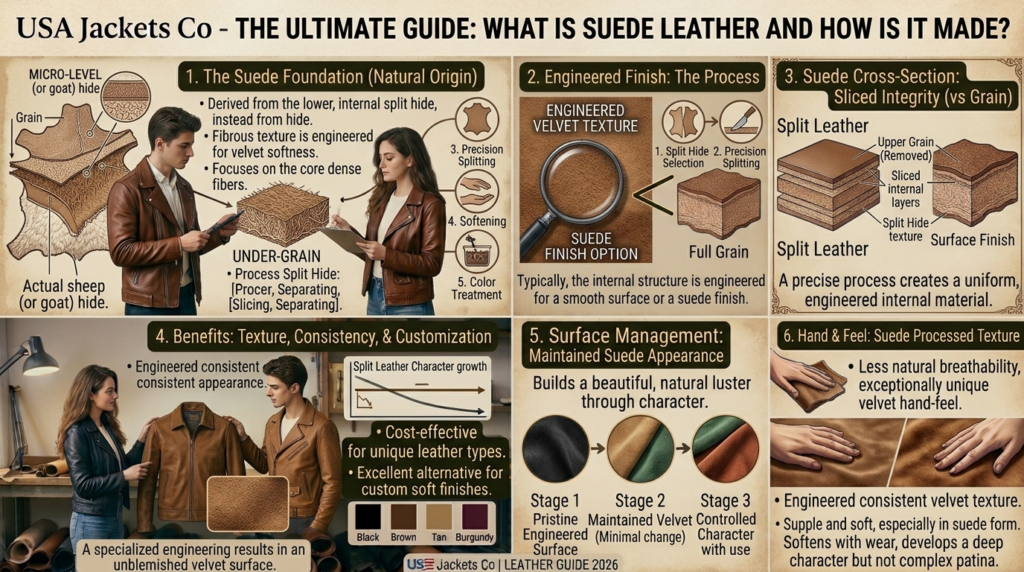
Suede is a type of leather recognised by its soft, velvety nap. Rather than having the smooth grain surface associated with many leather jackets, suede has a fine raised texture that changes shade when you brush it in different directions. It is used in clothing, footwear and accessories, including lightweight and statement leather jackets.
Suede is made from animal hide, not from a synthetic fabric, although imitation suede products are also sold. The source hide, thickness, tanning and finishing all affect the final result. If you are considering a suede jacket, it helps to understand how the material is produced, what makes one suede different from another, and how to care for its distinctive surface.
What is suede leather?
Suede is leather with a soft, fibrous nap. It is commonly produced by finishing the flesh side of a hide or by using a split layer after the grain-bearing outer section has been separated. The surface fibres are raised and refined to create a matte, tactile finish. The word “suede” therefore describes the characteristic surface and material, rather than one specific animal or one fixed thickness.
Suede can be made from sheepskin, lambskin, goatskin, cowhide and other hides. The animal source influences the feel and structure, but the finishing process also matters. A suede jacket made from a fine, supple hide may feel very different from one made with a thicker, more substantial split.
How is suede made?
Production begins with a hide that has been preserved through tanning. The tannery selects the section and surface intended for a suede finish. In a common method, the flesh side is worked to raise a fine nap. In another method, the hide is split into layers and the fibrous side of the selected layer is finished. The surface is then refined so the nap is reasonably even.
The leather may be dyed before or after parts of the finishing process, depending on the tannery’s method. Colour can be applied through the material or used as part of a finishing system. The maker then selects the suede for a product and cuts it into panels. On a jacket, panel matching matters because the nap can reflect light differently depending on its direction. A careful maker pays attention to how pieces are laid out so the garment looks consistent.
There is no single recipe for every suede. Hide type, tanning, splitting, dyeing, brushing and any protective treatment influence the texture and care requirements. A product listing that says only “suede leather” gives you a starting point, but more detail is useful when comparing two jackets.
Different types of suede by hide
Sheepskin and lambskin suede
Sheepskin and lambskin suede are often chosen for their soft hand and flexible feel. Lambskin generally comes from a younger animal and may feel particularly fine, although individual hides and finishes vary. A lighter suede can work well for a relaxed jacket designed for mild weather and everyday styling.
Goatskin suede
Goatskin suede can offer a distinctive grain-side structure beneath the nap and may feel a little more substantial than some fine suedes. The result depends on the hide and processing. It can be an option for buyers who want a textured surface without choosing a very delicate-feeling garment.
Cowhide suede
Cowhide suede can be made in a range of weights. It may feel firmer or more substantial than suede from smaller hides, depending on the selection and finishing. For a jacket, check how the material drapes and bends rather than assuming that a heavier feel automatically means better quality.
What makes suede different from smooth leather?
The most obvious difference is the surface. Smooth leather presents a finished grain-side appearance, while suede has a soft nap that gives it a matte, textured look. This changes how the jacket reflects light and how it pairs with other fabrics. Suede often looks relaxed and tactile; smooth leather can appear sharper, more polished or more structured depending on the finish.
Suede also needs different day-to-day handling. Its nap can collect dust and show pressure marks, and the open surface may absorb moisture or oils. Some smooth leathers have protective finishes that make routine wiping easier, although smooth leather is not automatically waterproof or stain-proof. Choose based on the finish of the actual garment and the care you are prepared to give it.
Suede and nubuck: a quick distinction
Suede and nubuck can look similar because both have a fine, velvety surface. Traditionally, suede is made from the flesh side or a split layer, while nubuck is created by lightly buffing the grain side of the hide. The distinction is about which side of the hide is finished. Their exact feel and performance still depend on the leather and process. Our separate suede versus smooth leather guide explores how suede fits into a wardrobe; a dedicated suede-and-nubuck comparison should be used when you need a closer material distinction.
Why choose a suede jacket?
- Soft visual texture: The nap gives a jacket depth and a matte appearance that differs from glossy or polished leather.
- Easy colour coordination: Earth tones, dark neutrals and muted shades can pair naturally with denim, knitwear and simple casual pieces.
- Relaxed character: Suede often works well in shirt-jacket, bomber, trucker-inspired and clean casual silhouettes.
- Different finish options: It can be dyed in a variety of shades, from classic tan and brown to black, navy and other colours.
- Layering versatility: A well-fitting suede jacket can sit over a T-shirt, shirt or lightweight knit, depending on its cut and lining.
These are style advantages rather than guarantees of performance. Suede is not the right choice for every climate or routine. If you regularly work outdoors, travel in wet weather or prefer a jacket that can be wiped clean quickly, a different finish may be more convenient.
How to choose a suede leather jacket
Start with the intended use
Think about where the jacket will be worn. A lightweight suede bomber may be suitable for commuting, dinners and casual weekends in dry conditions. A lined design may offer more coverage for cooler days, but warmth depends on the lining, fit and layers underneath. Suede alone does not make a jacket a winter coat.
Check the feel and drape
Suede should feel consistent for the type of finish being sold. It should not feel unexpectedly papery, brittle or excessively stiff. If you can inspect it in person, gently move the material and look at how the nap changes direction. If buying online, seek close-up photographs and ask for details about the hide and weight.
Look at panel matching
Because nap direction affects how light is reflected, panels can appear to be slightly different shades even when they are dyed the same colour. This is part of suede’s character, but obvious mismatches can make a garment look uneven. Check product photographs of the front, back and sleeves rather than judging from one image.
Evaluate the jacket construction
Inspect shoulder placement, sleeve length, chest room, lining attachment, seam finishing, pockets and closures. Suede is only one part of the garment. Compare the size chart with a jacket you already own, and make sure you can move comfortably with the layers you expect to wear.
Understand the care instructions
Ask whether the suede has been treated and what the maker recommends for routine cleaning. Do not assume that a spray or conditioner sold for smooth leather is suitable for suede. A treatment can darken the nap or change its feel if it is not designed for the material.
How to care for suede
- Brush gently when dry. Use a clean suede brush to lift dust and refresh the nap. Brush lightly and avoid aggressive scrubbing.
- Deal with dry marks carefully. A suede eraser may help with some surface marks, but test any method on a hidden area first and follow the product instructions.
- Blot accidental moisture. If the jacket becomes damp, use a clean absorbent cloth to lift surface water without rubbing. Let it dry naturally in a ventilated place.
- Avoid direct heat. Do not place suede on a radiator, use a hair dryer or leave it in strong direct sunlight to speed drying. Heat can affect the leather and its colour.
- Keep oils and sprays away. Perfume, body oils, food grease and some household cleaners can leave marks. Allow grooming products to dry before putting the jacket on.
- Store with room around it. Use a broad hanger and keep the jacket in a cool, dry, ventilated wardrobe. Avoid crushing the nap under heavy garments.
- Use specialist help for difficult stains. If a stain is large, oily or deeply set, consult a leather-care professional experienced with suede rather than experimenting with household chemicals.
Can suede get wet?
Suede can absorb water and may develop darker patches, tide marks or changes in texture when it gets wet. Some products receive a protective treatment, but that does not make every suede jacket waterproof. Check the maker’s instructions and avoid wearing suede in heavy rain if you want to reduce the chance of staining.
If the jacket is caught in a shower, gently blot excess moisture, reshape it and let it dry naturally away from heat. Once fully dry, a light brushing may help restore the nap. If the surface remains marked or stiff, ask a suede-care specialist for advice.
Common buying mistakes to avoid
- Assuming every suede jacket is made from the same hide or has the same thickness.
- Confusing genuine suede with synthetic imitation suede without checking the shell description.
- Choosing only by colour and ignoring nap consistency, lining and construction.
- Expecting suede to behave like a coated smooth leather in rain or around spills.
- Applying a generic leather conditioner or cleaner without checking whether it is safe for suede.
- Buying a close fit without checking how the jacket will sit over a shirt or knit.
For a more complete inspection, use the leather jacket checklist and read the buying guide before checkout.
FAQs about suede leather
Is suede real leather?
Yes. Genuine suede is made from animal hide that has been finished to create a soft nap. Synthetic imitation suede is also available, so check the product’s shell description if the distinction matters to you.
Is suede always made from split leather?
Suede is commonly made from the flesh side of a hide or from a split layer, but production methods and trade descriptions can vary. Ask the seller which part of the hide is used for the specific jacket.
Is suede less durable than smooth leather?
It is different rather than uniformly inferior. The nap can show scuffs, pressure marks and stains more readily, while some smooth finishes are easier to wipe. Durability depends on the hide, thickness, finish, construction and how the jacket is used.
Does suede need waterproofing?
Not every suede jacket should be treated with the same product. If the maker recommends a suede protector, follow the instructions and test it in a hidden area because some treatments can change colour or texture. A protector does not make suede fully waterproof.
Can a suede jacket be worn every day?
It can be, if the climate and routine suit the material and you are comfortable with its care needs. For frequent use in wet or messy conditions, a more easily cleaned finish may be more practical.
How should a suede jacket be stored?
Hang it on a broad hanger in a cool, dry, ventilated wardrobe. Keep it away from direct sunlight, moisture and heavy garments that can flatten or crease the nap.
Can suede be cleaned at home?
Light dust can often be removed with a clean suede brush when the jacket is dry. Stains, oil marks and colour transfer may require specialist care. Always follow the maker’s instructions for the exact finish.
Is suede the right finish for your wardrobe?
Suede offers a soft, matte texture that can make a leather jacket feel distinctive without relying on shine or heavy detailing. It is a strong option when you like its appearance and can protect it from avoidable moisture, stains and rough handling. Before buying, check the hide, nap, construction, fit and care requirements. The right suede jacket is one that suits both your style and the way you actually live. If you are considering a made-to-order design, explore USA Jackets Co’s Custom Leather Jackets page and confirm suede availability, finish and care details before ordering.
