
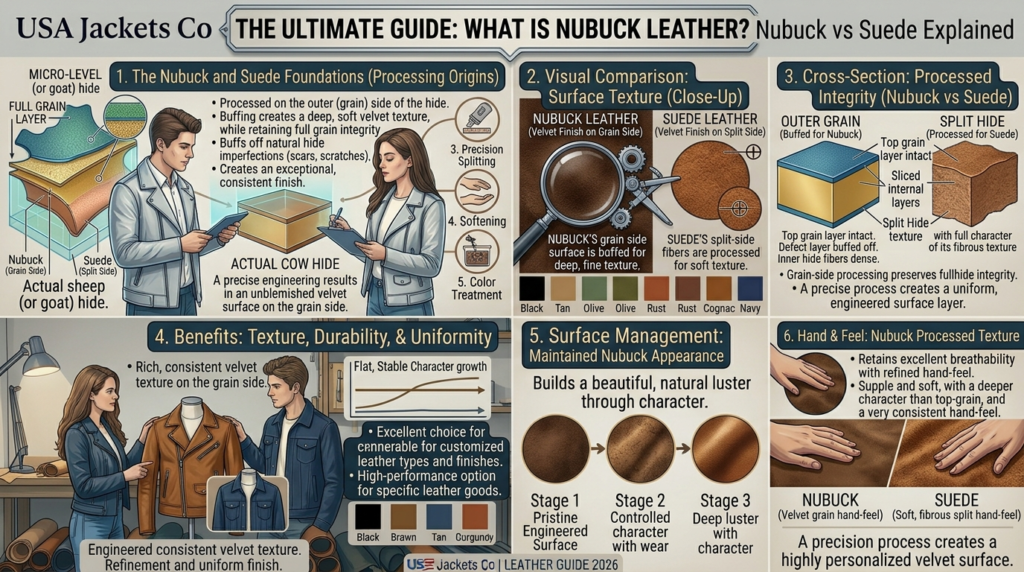
Nubuck leather is genuine leather whose outer grain surface has been lightly sanded or buffed to create a short, fine, velvety nap. It can look similar to suede, but the two materials are made from different parts of the hide: nubuck is usually finished from the grain side, while suede is made from the flesh side or a split layer. That difference affects its feel, appearance, care and typical wear.
For jacket buyers, nubuck offers a matte, tactile alternative to smooth leather. It can feel refined without looking glossy, but its open, brushed surface needs thoughtful protection from water, oils and stains. The best choice depends on the quality of the hide, the finish, the jacket’s construction and how you plan to wear it.
What Is Nubuck Leather?
Nubuck is a type of finished leather, not an animal species and not a separate tanning method. It is generally made by lightly abrading the grain side of a hide—often cowhide or calfskin—until a very short nap appears. The natural grain structure remains beneath that surface treatment, although the original smooth grain appearance is changed by buffing.
Move your hand across nubuck and the nap may shift slightly, creating subtle changes in shade. The surface usually feels fine and velvety rather than long or fuzzy. Its appearance is typically matte, which gives jackets a softer visual character than polished or heavily finished leather.
Labels can vary between manufacturers, so check the actual material description. A product described as “nubuck effect” or “nubuck-look” may be synthetic or coated material rather than genuine nubuck leather.
How Is Nubuck Leather Made?
The process begins with a suitable hide that has been tanned and prepared. The grain side is then carefully buffed or sanded to raise a fine nap. The amount of abrasion matters: too much can make the surface uneven, while inconsistent finishing can create patches that catch light differently.
The leather is then coloured and finished according to the intended appearance. Some nubuck has little surface protection so that its natural feel remains prominent; other versions receive a treatment intended to improve resistance to everyday marks. These finishes can change how the material feels and responds to moisture, so “nubuck” alone does not tell you the complete specification.
Nubuck vs Suede: What Is the Difference?
Nubuck and suede are both napped leathers, which explains why they are often confused. The main distinction is the side or layer of the hide used to create the surface.
| Feature | Nubuck | Suede |
|---|---|---|
| Hide surface | Usually buffed from the outer grain side | Usually finished from the flesh side or a split layer |
| Nap | Short, fine and relatively dense | Often longer, softer and more visibly fibrous |
| Hand feel | Velvety but can feel slightly firmer | Often plush and more flexible |
| Appearance | Fine matte surface with subtle shading | More pronounced brushed texture |
| Typical care | Nubuck-specific brush, eraser and protector where suitable | Suede-specific brush, cleaner and protector where suitable |
Nubuck is often more resistant to abrasion than comparable suede because it retains the denser grain-side structure. That is a general tendency, not a guarantee: hide quality, thickness, tanning, finishing and construction all influence performance. Neither material should be treated as waterproof.
If you are deciding between a brushed surface and a smooth one, read our suede vs smooth leather jacket guide for a wardrobe-focused comparison.
What Are the Advantages of Nubuck?
1. A refined, non-glossy appearance
Nubuck gives a jacket a soft, understated finish. It adds texture without relying on shine, making it useful for casual and smart-casual outfits.
2. A fine, comfortable surface
The short nap gives nubuck a distinctive hand feel. Depending on the hide and finish, it can feel supple while still retaining more body than some softer suede garments.
3. Natural-looking colour variation
Because the surface is not a uniform glossy coating, the nap can create gentle tonal shifts as light falls across it. This can give a jacket depth without extra decoration.
4. A useful alternative to smooth leather
If your wardrobe already includes a black or brown smooth leather jacket, nubuck introduces a different texture while keeping the familiar character of genuine leather.
What Are the Limitations of Nubuck?
It can mark more easily
The brushed surface can pick up oils, dirt and visible marks. Contact with a greasy hand, bag strap or rough surface may change the nap in a way that is difficult to reverse completely.
Moisture can alter its appearance
Water may darken nubuck temporarily or leave marks as it dries. Some products are treated for better water repellency, but that does not make them waterproof. Check the maker’s care instructions rather than assuming every nubuck jacket has the same protection.
It needs material-specific care
Ordinary smooth-leather polish, wax or conditioner can flatten the nap or create dark patches. Nubuck requires products labelled for nubuck, and even those should be tested on a concealed area first.
How Durable Is Nubuck Leather?
Nubuck can be a practical leather for a jacket when the hide is well selected and the garment is properly made. Its grain-side foundation is generally denser than the inner split used for many suede products, but durability is not determined by the name alone.
When assessing a jacket, look beyond the surface. Check the leather thickness and consistency, panel placement, stitching at stress points, lining, zipper, pocket construction and fit. A beautiful nubuck finish cannot compensate for weak seams or a poorly fitting pattern.
Think about your routine as well. A nubuck jacket worn occasionally in dry conditions may stay attractive with sensible care. A jacket exposed to frequent rain, abrasive work or repeated contact with oily surfaces may be more demanding to maintain.
How to Care for a Nubuck Leather Jacket
- Read the care label first. Finishes differ, so follow the manufacturer’s instructions before applying any treatment.
- Brush gently when dry. Use a clean nubuck brush with light strokes to lift surface dust and refresh the nap. Avoid aggressive scrubbing.
- Use a nubuck eraser only for suitable marks. Test it in a hidden spot and stop if the colour or texture changes.
- Blot moisture; do not rub. If the jacket gets damp, gently press a clean, absorbent cloth against the area. Let it air-dry naturally on a broad hanger, away from direct heat.
- Choose protection carefully. If the manufacturer permits a protector, use one specifically designed for nubuck and test it on a concealed area. Sprays can change colour or feel.
- Store it with room to breathe. Keep it in a cool, dry place on a suitable hanger. Avoid tightly sealed plastic covers and prolonged direct sunlight.
Do not put a nubuck jacket in a washing machine, tumble dryer or household clothes dryer. Avoid household detergents, oils and untested cleaning mixtures. For a large stain or valuable garment, ask a leather-care professional who works with nubuck.
What Should You Check Before Buying a Nubuck Jacket?
- Material wording: Does the seller clearly state genuine nubuck leather rather than “nubuck-look” or “suede effect”?
- Hide and finish: Is the leather type and surface treatment explained clearly?
- Nap consistency: Do the panels look reasonably even, without unexplained bald or patchy areas?
- Colour: Are natural shade variations shown honestly in the product photographs?
- Care instructions: Does the seller explain how to clean, protect and store the material?
- Construction: Are seams, lining, zipper, pockets and cuffs finished neatly?
- Fit: Are garment measurements provided so you can compare them with a jacket you already own?
For buyers considering different hides and finishes, the USA Jackets Co custom leather jacket page outlines available material choices, including suede and nubuck. Use the product details and consultation process to confirm the exact leather and finish before ordering.
Is Nubuck a Good Choice for a Leather Jacket?
Nubuck is worth considering if you like a matte, velvety surface and are comfortable giving the jacket a little more attention than a simple smooth-leather style may need. It can work well for casual outfits, textured layers and understated statement pieces.
It may be less suitable if you want a jacket that you can wear frequently in wet weather without thinking about care. In that situation, compare the specific finish with a more protected smooth leather option and check the manufacturer’s guidance.
There is no universal winner between nubuck, suede and smooth leather. Choose according to the look you prefer, the weather you face, the maintenance you are prepared to do and the quality of the garment itself.
Frequently Asked Questions
Is nubuck real leather?
Yes. Genuine nubuck is leather, usually made by buffing the outer grain surface to create a fine nap. Products described as “nubuck-look” may be synthetic, so check the material specification.
Is nubuck the same as suede?
No. Nubuck is generally made from the grain side of the hide, while suede is made from the flesh side or a split layer. Both have a napped surface, but their texture and underlying structure differ.
Is nubuck waterproof?
No. Some nubuck may be treated to repel a limited amount of moisture, but it should not be considered waterproof. Follow the care instructions and avoid prolonged exposure to rain.
Is nubuck more durable than suede?
It is often more abrasion-resistant than comparable suede because it uses the grain-side layer. However, hide quality, thickness, finish and construction can change the result.
Can I use normal leather conditioner on nubuck?
Do not assume that a conditioner for smooth leather is suitable. It can flatten or darken the nap. Use only products specifically approved for nubuck and test them in a hidden area.
Does nubuck get softer with wear?
Its feel can change as the jacket is worn and the nap is handled, but the amount depends on the leather and finish. Do not buy a jacket that feels uncomfortable expecting wear to correct a poor fit.
Final Takeaway
Nubuck is genuine leather with a finely buffed grain surface, valued for its matte appearance and velvety feel. It is different from suede, even though both have a brushed texture. Before buying, check the material description, surface consistency, construction, fit and care requirements. A well-made nubuck jacket can add useful texture to a wardrobe, provided its maintenance needs match your lifestyle.
