
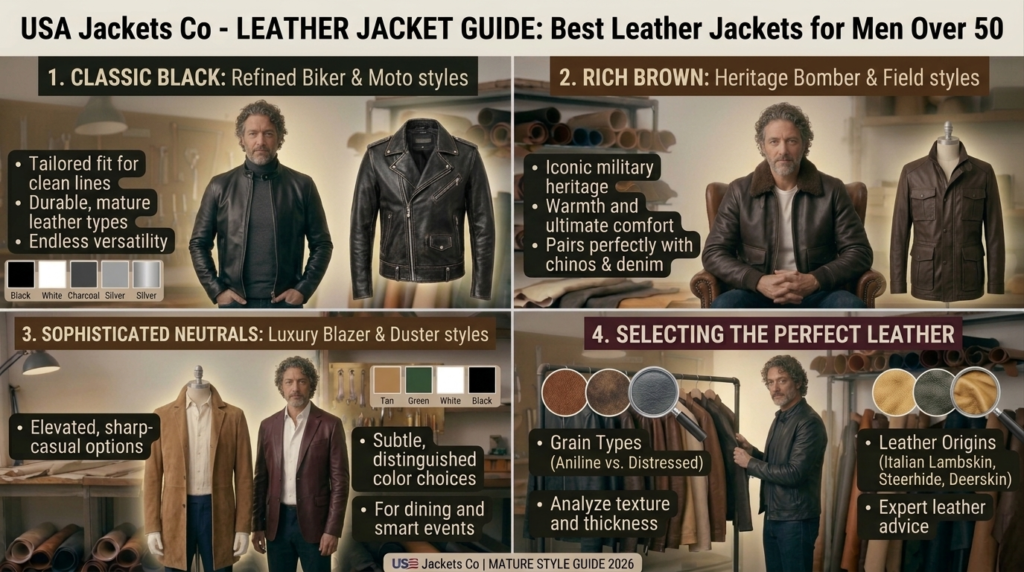
Men over 50 do not need a different set of fashion rules. The best leather jacket is the one that suits your routine, fits comfortably, works with clothes you already own, and feels like you. For many men, that means choosing a versatile silhouette, a colour that is easy to combine, and materials and construction that make sense for how often the jacket will be worn.
This guide compares practical leather-jacket styles for men over 50, explains how to choose the right fit and colour, and shows how to wear a jacket without making the outfit feel forced. The goal is not to dress younger or older. It is to choose confidently and get useful wear from your purchase.
Quick answer: which leather jacket is best for men over 50?
For a first or everyday jacket, start with a clean racer, a simple bomber, or a minimal collared leather jacket. These styles are easy to wear with jeans, chinos, knitwear, polos and casual shirts. Choose a classic biker if you enjoy its stronger details, or a shearling-style jacket if warmth and a more substantial winter look are priorities. Fit, leather finish, lining and intended use matter more than age.
1. The best leather-jacket styles to consider
Clean racer jacket: understated and versatile
A racer jacket usually has a relatively simple front, a short stand collar and limited decorative hardware. That clean design makes it a useful option when you want a jacket that can work with a T-shirt on the weekend or a fine-gauge sweater and chinos for a relaxed dinner. Black gives it a sharper, more defined appearance; dark brown can feel softer and less stark.
Look for a silhouette that follows your shoulders without pulling across the chest. If you regularly wear shirts or knitwear underneath, try the jacket with those layers rather than judging it over a thin T-shirt alone.
Leather bomber: relaxed and easy to style
A bomber jacket typically has a fuller body and ribbed or gathered details at the cuffs and hem. It can be a comfortable everyday choice if you prefer a little room through the torso or want to layer over a lightweight sweater. A restrained bomber in dark brown, black or tan pairs well with straight-leg jeans, chinos and casual footwear.
Check that the hem sits where you want it to. A very short, tightly gathered hem can change the proportions of an outfit, while an overly long body may lose the classic bomber shape.
Minimal collared jacket: a smart-casual option
A simple collared leather jacket is useful if your wardrobe includes button-down shirts, dark denim, chinos and knitwear. The collar gives the jacket a more familiar shirt-like outline, while the leather keeps it distinct from ordinary casual outerwear. Choose clean pockets and modest hardware if you want the jacket to work across a wide range of occasions.
Classic biker: character without overdoing the details
A biker jacket often features an angled zip, lapels, snaps or multiple pockets. Those details are part of its appeal, and there is no reason to avoid them because of your age. If you want a more adaptable version, choose a design with balanced proportions and hardware that does not dominate the whole outfit. Pair it with plain layers so the jacket remains the focal point.
For actual motorcycle riding, do not treat a fashion biker jacket as protective riding equipment by default. Check for appropriate motorcycle-specific construction, armour compatibility and relevant safety certification before relying on any jacket for riding.
Shearling or aviator-inspired jacket: a colder-weather statement
Aviator-inspired jackets with a shearling-style collar or warm lining create a more substantial look and can be practical in cold conditions, depending on the actual lining, fit and weather. They are often visually heavier than racers or bombers, so keep the rest of the outfit simple: straight jeans, a plain knit and sturdy boots are usually enough.
Do not assume that the appearance of a shearling collar tells you how warm the entire jacket will be. Check the lining, insulation, closure, cuff design and the temperatures for which you expect to wear it.
2. Choose a jacket around your real routine
Before comparing colours or leather types, think about where the jacket will be used most often. A jacket bought for occasional dinners can be different from one worn on daily errands, long drives or cold-weather walks.
- Everyday wear: favour a comfortable, versatile cut with pockets you will use and a colour that matches most of your wardrobe.
- Smart casual occasions: look for a cleaner front, modest hardware and a shape that sits neatly over a shirt or fine knit.
- Travel: consider weight, ease of layering, pocket placement and whether the jacket will be comfortable when seated for a long time.
- Cold weather: check the actual lining and room for layers rather than relying on the leather alone.
- Occasional statement piece: a biker, vintage-inspired or distinctive colour can be a good choice if it genuinely reflects your style.
A useful rule is to buy for the situations you experience most frequently, not for an imagined lifestyle. A jacket that works with your usual trousers and shoes will generally earn more wear than one that requires a completely new wardrobe.
3. Which colour works best?
Black: sharp and easy to coordinate
Black is a strong option if your wardrobe already includes black shoes, dark denim, grey knitwear or monochrome outfits. It creates a defined contrast with light shirts and can make a simple outfit look more deliberate. If you find solid black too stark, choose a less glossy finish or combine it with softer colours such as charcoal, cream or olive.
Dark brown: versatile with a warmer feel
Dark brown works naturally with blue jeans, cream knitwear, olive trousers, denim shirts and many earth tones. It can feel less severe than black while still looking classic. Check the shade in natural light if possible: chocolate, espresso and reddish brown can look quite different beside the clothes you already own.
Tan and lighter brown: casual and distinctive
Tan can bring brightness to a neutral wardrobe and works well with navy, denim, white, cream and olive. Because lighter colours show marks and contrast more readily, think about how carefully you want to maintain the jacket and how often you will wear it in wet or dusty conditions.
Other colours: choose with intention
Burgundy, olive and other less common shades can be excellent if they fit your existing clothes. To keep the outfit balanced, make the rest of the combination relatively simple. There is no age-based colour rule; the practical question is whether you will enjoy wearing the shade repeatedly.
4. Get the fit right before choosing the label
A good leather jacket should feel secure at the shoulders and comfortable when you move. Leather may relax slightly with wear depending on the hide, finish and construction, but you should not count on a jacket stretching enough to correct a poor fit.
- Shoulders: the seams should sit close to the natural shoulder line for the intended style, without sharp pulling or excessive overhang.
- Chest: zip or fasten the jacket and take a full breath. It should not strain across the chest or create strong horizontal tension lines.
- Arms: reach forward, bend your elbows and lift your arms. Some movement is expected, but the jacket should not pull uncomfortably across the back.
- Sleeves: check where the cuffs sit when your arms are relaxed and when you reach forward. Sleeve length can vary with the design.
- Body length: compare the length with the style and your proportions. A bomber, racer and longer collared jacket are not meant to finish at exactly the same point.
- Layering: try the jacket over the shirt or knitwear you expect to wear most often.
For more detailed measuring steps, see the Leather Jacket Size Guide and use the measurements supplied for the specific product. Do not rely on the letter size alone: sizing can vary by cut and manufacturer.
5. What should you look for in the leather and construction?
Price and the phrase “genuine leather” do not tell the whole story. Ask what type of leather is used, how it is finished, what the lining is made from and how the garment is constructed. Different leathers and finishes offer different combinations of softness, texture, structure and maintenance needs.
- Leather description: look for a clear description of the leather type and finish rather than vague quality claims.
- Surface and feel: natural variation can be normal. Check product photographs and descriptions for the finish you prefer, whether smooth, textured, matte or distressed.
- Stitching: seams should appear even, with no obvious skipped stitches, loose threads or puckering in the product images.
- Zips and snaps: examine the hardware and closure details. If you can inspect the jacket in person, operate the closures to see whether they move smoothly.
- Lining: the lining affects comfort, layering and how the jacket feels when putting it on or taking it off.
- Pockets: decide whether you need secure internal storage, hand-warmer pockets or a clean front with fewer details.
- Care instructions: make sure the maintenance requirements suit how you plan to use the jacket.
If you are comparing leather grades, our guide to full-grain versus top-grain leather jackets explains the distinction in more detail. For budgeting, read how much a quality leather jacket should cost; the right comparison is between materials, construction, fit, service and total cost rather than price alone.
6. Five outfit formulas that feel natural
- Everyday classic: dark brown racer, blue straight-leg jeans, a white or cream T-shirt and simple leather trainers.
- Smart casual: black collared jacket, light blue button-down shirt, charcoal chinos and clean boots.
- Relaxed weekend: dark bomber, textured knit, dark denim and low-profile sneakers.
- Cold-weather layering: aviator-inspired jacket, midweight sweater, straight jeans and sturdy boots, with enough room for the layers underneath.
- Modern biker: pared-back biker jacket, plain dark T-shirt, black or indigo jeans and understated boots. Keep accessories simple if the jacket has prominent hardware.
These are starting points, not rules. Adjust the fit and colours to suit your proportions, climate and personal taste. If the jacket is visually detailed, quieter layers usually help the outfit feel balanced.
7. Common mistakes to avoid
- Buying too tight: a jacket that only works over a thin T-shirt may not suit your real wardrobe.
- Choosing by age stereotypes: comfort, proportion and personal preference matter more than rules about what men over 50 “should” wear.
- Confusing weight with quality: a heavier jacket is not automatically better; choose for the intended use and construction.
- Ignoring the return policy: check return or exchange conditions, especially for international orders and made-to-measure products.
- Assuming all leather handles weather the same way: finishes and construction differ. Follow the product’s care instructions and avoid prolonged exposure to moisture unless the garment is specifically designed for it.
- Buying a style that does not match your clothes: consider your existing shoes, trousers and knitwear before committing to an unusual colour or silhouette.
8. A simple buying checklist
Before ordering, answer these questions:
- Where will I wear this jacket most often?
- Does the style work with at least three outfits I already own?
- Have I checked the product-specific size chart and my measurements?
- Can I move comfortably in the jacket with my usual layers?
- Are the leather, lining, hardware and care instructions clearly described?
- Do the shipping estimate, return conditions and total cost work for me?
- Am I choosing it because I like it, rather than because I think I am expected to dress a certain way?
If you want a jacket made around your preferred colour, fit or details, explore the custom leather jackets option and confirm the measurement process, production time and return or alteration terms before ordering.
Frequently asked questions
Can a man over 50 wear a biker jacket?
Yes. Choose a cut and amount of hardware that suit your taste. A simple biker jacket can be worn with jeans, knitwear and boots at any age.
Is black or brown better for men over 50?
Neither is universally better. Black works well with monochrome and cooler neutrals; brown pairs naturally with denim, cream, olive and other earth tones. Choose the shade that coordinates with your existing clothes.
Should a leather jacket fit tightly?
It should fit securely without restricting normal movement or straining at the zip. The ideal fit depends on the style and whether you plan to layer underneath.
Which leather jacket is best for everyday wear?
A clean racer, simple bomber or minimal collared jacket is often versatile for everyday use. Choose according to your climate, routine, preferred fit and wardrobe.
Are expensive leather jackets always better?
No. Compare the stated leather type, finish, construction, lining, fit, warranty or service terms, and return policy. Price alone is not a reliable measure of how suitable a jacket will be for you.
Can I use a fashion leather jacket for motorcycle riding?
Not automatically. A fashion jacket may not provide the abrasion resistance, impact protection or certified features needed for riding. Choose motorcycle-specific protective equipment and verify its specifications.
Final thoughts
The best leather jacket for a man over 50 is a jacket that feels right, fits well and earns a place in everyday life. Start with your routine, choose a silhouette you enjoy, check the fit and construction carefully, and select a colour that works with the clothes you already wear. A thoughtful purchase will feel personal and useful—not like an attempt to follow an age-based fashion rule.
