Buying a leather jacket online can save time and give you access to more styles, colours and leather types than you may find locally. The difficult part is that you cannot try it on before paying. Size labels vary, product photos can hide important details, and a jacket that looks perfect on a model may fit differently on your body.
The safest approach is to verify three things before ordering: the measurements, the product details and the seller’s policies. This guide walks you through each check so you can make a confident decision without relying on a size letter or a photograph alone.
Quick Answer: How to Buy a Leather Jacket Online
- Choose the jacket style and decide what you will wear underneath it.
- Measure your body and, if possible, a jacket you already like.
- Read the product-specific size chart and confirm whether it shows body or garment measurements.
- Check the leather description, lining, hardware, construction details and all product photos.
- Read reviews for comments about fit, quality and sizing—not just the star rating.
- Review delivery estimates, return and exchange conditions, and any possible import charges before checkout.
- Ask the seller for clarification if a measurement or policy is unclear.
1. Decide What You Need Before Comparing Products
Start with how you will use the jacket. A close-fitting café racer, a relaxed bomber and a lined aviator jacket are designed to sit differently on the body. Choosing the style first helps you judge whether the measurements and shape make sense for your needs.
- Everyday wear: Look for a versatile cut that works with the trousers, shoes and tops you already own.
- Cool-weather layering: Check the lining, body length and space available for a knit or mid-layer.
- Smart-casual outfits: A cleaner silhouette and restrained hardware may be easier to combine with shirts or tailored trousers.
- Motorcycling: Do not treat a fashion jacket as protective riding equipment. Check the specific garment’s protective construction, armour and relevant certification before using it for riding.
- A distinctive or personalised look: Confirm exactly which colours, details and measurements can be customised, and whether custom orders have different return or alteration terms.
If you are still deciding which silhouette suits your routine, start with our guide to choosing a jacket for your lifestyle or the first-time buyer’s style guide.
2. Read the Size Chart—Do Not Guess From S, M or L
A size label is only a starting point. A medium from one brand may not match a medium from another, and two jackets from the same seller can have different cuts. Always open the size chart for the exact product you want to buy.
First, identify which measurements the chart provides:
- Body measurements describe the person a size is designed to fit. The garment needs some additional room for movement and clothing underneath.
- Garment measurements describe the jacket itself. These figures may be larger than the body measurements the jacket is intended to fit.
Do not compare a body measurement directly with a garment measurement as if they were equivalent. If the chart does not say which method it uses, ask the seller before ordering. Also check the unit—centimetres or inches—and follow the seller’s stated measuring method.
Use the USA Jackets Co Size Guide and our detailed leather jacket fit guide as supporting references, then confirm the measurements on the individual product page.
3. Measure Yourself and Compare Like With Like
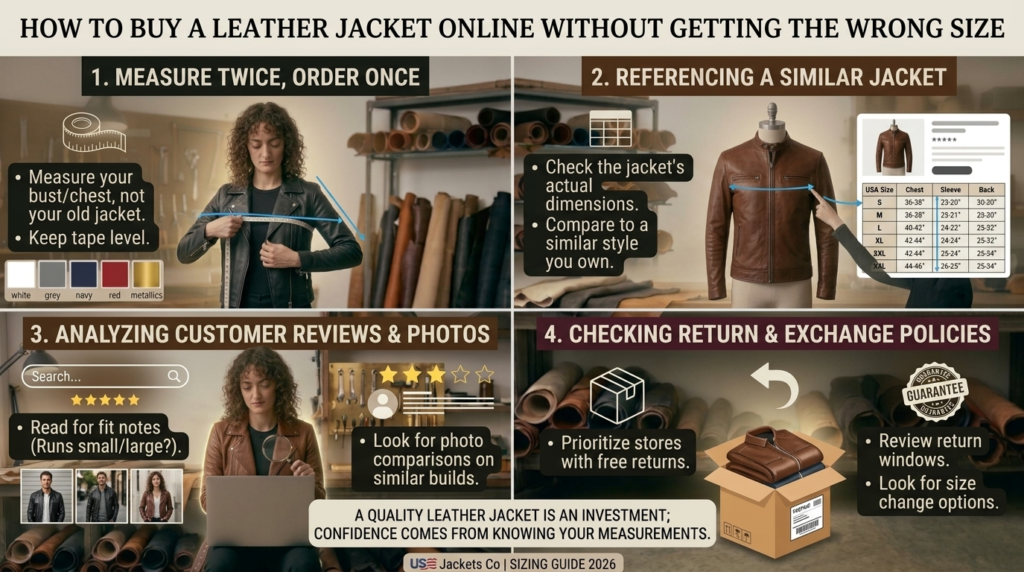
Use a flexible measuring tape, stand naturally and keep the tape level without pulling it tightly. If possible, ask someone to help you measure your back and shoulders. Record the numbers so you can compare different products consistently.
Chest
Measure around the fullest part of your chest, passing under your arms and across your shoulder blades. Keep the tape comfortably snug and breathe normally. This is useful for size selection, but it cannot tell you by itself whether the shoulders, sleeves and body length will fit.
Shoulders and sleeves
Follow the chart’s instructions for shoulder width. For sleeve length, check whether the measurement starts at the shoulder seam or another point; different methods produce different numbers. Your arm should be relaxed and slightly bent when measuring if that is what the seller’s instructions specify.
Body length and waist
Check the requested method before measuring your waist or jacket length. Think about where you want the hem to sit and whether the jacket will bunch when you sit. Body length matters especially if you have a longer or shorter torso than average.
Measure a jacket you already own
Lay a jacket that fits you well on a flat surface. Smooth it without stretching it, then measure the chest width, shoulders, sleeve and back length. Compare these figures only with garment measurements taken in the same way. If the jacket is measured flat across the chest, do not compare that half-width directly with a full body circumference.
This second comparison is helpful because it connects the chart to a real garment you already find comfortable. However, it is not a substitute for checking the new jacket’s cut, lining and intended fit.
4. Inspect the Product Page Like a Checklist
Photos are useful, but the written specification should explain what you are actually buying. Before adding a jacket to your cart, look for the following details.
- Material: Check whether the listing clearly identifies leather type or alternative material.
- Lining: Confirm whether it is lightweight, quilted or intended for extra warmth.
- Construction: Check the closure, pockets, seams, cuffs and visible hardware against the written description.
- Fit: Look for slim, regular, relaxed or oversized wording and compare it with the chart.
- Colour and care: Compare available photos and read the care instructions, especially for suede or special finishes.
- Included items: Confirm what is included in the purchase.
Look at the front, back, side and close-up images. Zoom in on seams, cuffs, zips, lining and pocket construction. If the page only shows one distant photograph and gives almost no specifications, you have less information on which to base a purchase.
5. Use Reviews to Answer Specific Questions
A high star rating can be encouraging, but the written reviews may be more useful for choosing a size. Search for comments that mention the buyer’s measurements, the size ordered, the fit they wanted and whether the jacket matched the description.
Give extra attention to repeated patterns. Several independent comments that a style runs short in the sleeves may be more useful than one review saying it is “perfect.” Likewise, a complaint about a colour may reflect screen settings, while repeated comments about a different material or missing details deserve closer scrutiny.
Remember that reviews may refer to different body shapes, sizes or product versions. Use them as supporting evidence, not as a replacement for the current size chart.
6. Check Delivery, Returns and the Full Cost
Do not wait until after payment to discover how the order will reach you or what happens if the fit is wrong. Before checkout, review the seller’s current shipping and returns information.
- Dispatch and delivery: These are different dates; check the estimate for your destination.
- Returns and exchanges: Confirm the deadline, condition requirements, return-shipping responsibility and any fees.
- Custom items: Made-to-measure or personalised orders may have different cancellation, return or alteration rules.
- Import charges: Check whether duties, taxes or handling charges are included or collected separately.
- Checkout: Verify the final total, use a payment method you trust, and save the confirmation and product details.
Policies can differ by product and destination, so read the current terms rather than assuming that every retailer offers free returns or the same delivery window. If an important condition is missing, ask for clarification in writing before paying.
7. Ask the Seller Clear Questions Before Ordering
Contacting customer support is worthwhile when the answer could change your size choice or the total cost. Instead of sending only “What size am I?”, provide the information needed for a useful response.
You can ask:
- Does this chart show body measurements or the finished jacket measurements?
- Which size would you recommend for my chest and shoulder measurements if I want to wear a light sweater underneath?
- What is the actual sleeve length and back length for the size I am considering?
- Is this style intended to fit slim, regular or relaxed?
- Are the product photos representative of the available colour and finish?
- What are the current return or exchange conditions for my destination?
Include your measurements in the units used by the chart and mention the style of fit you prefer. Keep the response for reference. A specific written answer is more useful than relying on a vague promise that a jacket is “true to size.”
8. Understand Standard Sizing Versus Made-to-Measure
Standard sizes are usually the simpler option when your measurements align with the product chart. Made-to-measure or customised options may be worth exploring when standard proportions do not work well for you, or when you want specific design details.
Before ordering, ask which measurements are required, how they should be taken, whether the seller verifies them before production, and how fitting adjustments or cancellations are handled if the finished jacket does not fit as expected.
USA Jackets Co offers a custom leather jacket service for shoppers exploring personalised designs. Review the details and ask questions about your specific requirements before committing to a custom order.
9. Online Jacket Buying Red Flags
Pause before buying if you notice one or more of these warning signs:
- No usable size chart or no explanation of how measurements are taken.
- Material descriptions that are vague or contradictory.
- Only one unclear product image, with no useful detail shots.
- No clear information about shipping, returns or how to contact the seller.
- Pressure to pay immediately while important product questions remain unanswered.
- A final checkout total that changes unexpectedly or includes unexplained charges.
- Claims that sound absolute, such as a guarantee that every buyer will fit the same size, without measurements or conditions.
One missing detail does not automatically prove that a seller is untrustworthy, but it is a reason to ask questions. If you cannot get clear answers about fit, material, payment or returns, consider a product or retailer that provides better information.
10. Final Pre-Purchase Checklist
Before you place the order, confirm each item below:
- I have chosen a style that suits how I will wear the jacket.
- I have measured myself carefully and recorded the results.
- I understand whether the chart lists body or garment measurements.
- I have compared the measurements with a jacket that fits me well, where possible.
- I have checked the leather, lining, hardware, fit description and care details.
- I have reviewed photos and relevant customer feedback.
- I understand the shipping estimate for my destination.
- I have read the return and exchange rules, including any custom-order exceptions.
- I know the full checkout total and whether import charges may be separate.
- I have asked the seller about any unresolved question and saved the response.
For more general buying advice, read our leather jacket buying guide. If you are comparing fit across styles, our size and fit guide can help you assess the measurements before you order.
Frequently Asked Questions
Should I order my usual clothing size in a leather jacket?
Not automatically. Size labels vary by brand and style. Use the product-specific chart, check the measurement method and account for the layers you plan to wear underneath.
What if my measurements fall between two sizes?
Compare the fit priorities that matter most, such as shoulder placement, chest room and sleeve length. Ask the seller which size better suits your measurements and intended layers. If one size fixes the chest but makes the shoulders or sleeves unsuitable, a different cut may be a better solution.
Are product photos enough to judge quality?
No. Photos can help you assess the silhouette, colour and visible details, but they cannot confirm every material or construction claim. Read the written specifications and ask for clarification if an important detail is missing.
Can I return a leather jacket if it does not fit?
That depends on the seller’s current policy, the destination and whether the jacket is a standard-size or customised item. Check the return window, condition requirements, shipping costs and exclusions before placing the order.
Is made-to-measure always the safest choice online?
Not necessarily. It depends on how measurements are collected, how the seller verifies them and what fitting support is available. Standard sizing can work well when your measurements align with a clear chart; custom sizing requires careful instructions and a clear understanding of the adjustment policy.
Conclusion
The best way to buy a leather jacket online without getting the wrong size is to replace guesswork with a few simple checks. Measure accurately, understand the chart, compare the garment with something you already own, inspect the product details and read the seller’s terms before checkout. If anything important remains unclear, ask before paying. A little preparation can help you choose a jacket that suits your proportions, your wardrobe and the way you plan to wear it.
