
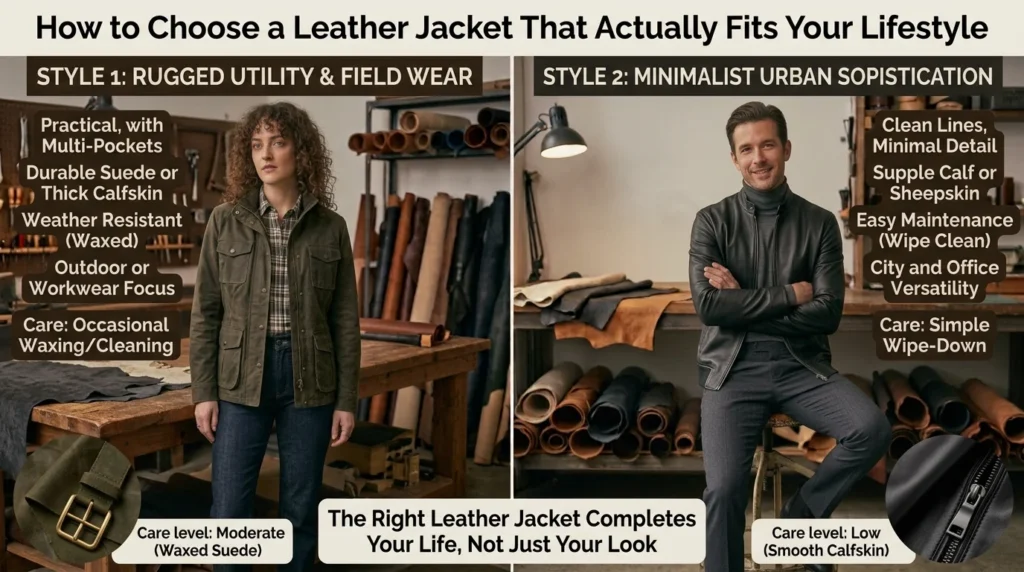
Choosing a leather jacket is easier when you start with your lifestyle instead of starting with a trend. A jacket can look perfect in a product photo and still be the wrong purchase if it does not suit your climate, daily routine, wardrobe, comfort preferences or the occasions when you plan to wear it.
The best leather jacket is the one you will reach for repeatedly. That means thinking about where you live, how often you travel, what you normally wear, how much layering you need and whether the jacket is primarily for fashion, everyday use or a specific activity.
This guide explains how to choose a leather jacket that fits your lifestyle, with practical questions you can answer before you buy.
Start With How You Will Actually Wear It
Before comparing leather types, colors or jacket details, picture a normal week. Ask yourself where the jacket will realistically be worn.
- Daily commuting: prioritize comfort, practical pockets, easy styling and a fit that works while moving.
- Weekend casual wear: focus on versatility and how well the jacket works with jeans, sneakers, boots and knitwear.
- Evening and social occasions: consider a cleaner silhouette, refined finish and a color that works with your smarter clothes.
- Travel: look for a comfortable weight, useful pockets and a style that works across several outfits.
- Motorcycle use: choose a purpose-built riding jacket and evaluate its construction and protective features rather than buying a fashion jacket simply because it is made from leather.
This simple exercise can eliminate many attractive options that do not actually match your routine.
Match the Jacket to Your Climate
Climate should influence your choice more than seasonal fashion advice. A jacket for a cool, dry autumn is not necessarily the same jacket you want for a cold winter commute or a mild spring evening.
For mild or transitional weather
A lighter leather jacket can be useful over a T-shirt, shirt or thin knit. A less bulky construction gives you more flexibility when temperatures change during the day.
For colder weather
Look beyond the word “leather.” Warmth depends on the leather weight, lining, insulation, construction and what you wear underneath. A jacket with room for a sweater can be more useful than an extremely slim jacket that only works over a T-shirt.
For wet climates
Leather should not automatically be treated as waterproof. If your jacket will frequently encounter rain, consider how the particular finish should be cared for and whether you are comfortable maintaining it. Suede generally demands especially careful handling around moisture.
Choose a Leather Type That Matches Your Priorities
Different leather types can produce very different wearing experiences.
| Leather or finish | Often suits buyers who want | Things to consider |
|---|---|---|
| Lambskin | Softness and a supple feel | May need more care than heavier leather |
| Sheepskin | Soft feel and versatile fashion use | Check the specific weight and finish |
| Cowhide | Substantial feel and rugged character | Can feel heavier or firmer |
| Goatskin | A balance of flexibility and character | Finish and construction still matter |
| Suede | Soft texture and relaxed styling | Requires careful surface maintenance |
| Full-grain | Natural grain and long-term character | Natural marks may be visible |
There is no universally best leather. The right choice depends on what you value most: softness, structure, texture, ruggedness, appearance or ease of care.
Pick the Jacket Style That Fits Your Wardrobe
Once you understand your routine, choose a silhouette that complements the clothes you already own.
Biker jacket
A biker jacket is a strong choice if you like denim, boots, graphic T-shirts and a more assertive aesthetic. Its hardware and distinctive front closure make it a statement piece, so it may not be the best option if your wardrobe is deliberately minimal.
Bomber jacket
A leather bomber can be easier to dress down and works naturally with T-shirts, jeans, sneakers and casual knitwear. It is a useful option for buyers who want leather without the sharper visual identity of a biker jacket.
Café racer jacket
The café racer is a good middle ground for someone who likes a clean, understated leather jacket. Its simpler appearance can work across casual and smart-casual outfits.
Aviator or shearling jacket
If you want a more substantial cold-weather look, an aviator or shearling-inspired design can make sense. The added bulk and strong styling character mean it should be chosen because it fits your climate and wardrobe, not simply because it is fashionable.
Leather blazer or refined jacket
If your routine includes dinners, creative offices or polished social settings, a cleaner leather blazer-style silhouette may fit better than a heavily detailed biker.
Think About Your Existing Wardrobe
A common mistake is buying a jacket in isolation. Instead, look at the clothes you already wear most often.
If your wardrobe is built around blue jeans, white T-shirts and sneakers, a black or brown versatile jacket can become an easy daily layer. If you wear chinos, knitwear and boots more frequently, a cleaner café racer or refined brown leather jacket may integrate more naturally.
For women, the same principle applies. Consider whether you normally wear jeans, trousers, dresses, skirts, boots or sneakers. A jacket should complement those pieces rather than require an entirely new wardrobe.
Choose a Color You Can Repeat
The best jacket color is usually the one you can wear with the majority of your existing clothes.
Black
Black is a strong all-round choice for buyers who want a defined, versatile appearance. It works particularly well with monochrome outfits, denim and darker footwear.
Brown
Brown creates a warmer, more relaxed look. It works especially well with denim, cream, beige, olive and earth-tone clothing.
Tan
Tan can give a jacket a lighter, more casual character and works well in transitional seasons.
Other colors
Red, green, blue, silver and other fashion colors can be excellent statement choices if your wardrobe supports them. They are less universally interchangeable, so choose them intentionally.
Get the Fit Right for Your Lifestyle
A leather jacket should allow normal movement without looking excessively loose. The right fit also depends on what you intend to wear underneath it.
Check the shoulders first
The shoulder seams should sit close to your natural shoulder points. If the shoulders are dramatically too wide or narrow, the jacket is unlikely to look balanced.
Check your movement
Raise your arms, reach forward and sit down. A good everyday jacket should accommodate normal movement without excessive pulling across the back or shoulders.
Think about layering
If you intend to wear sweaters or heavier shirts underneath, allow enough room for those layers. A very slim fit may look excellent over a T-shirt but become restrictive in colder weather.
Consider sleeve and body length
Sleeves should reach an appropriate point at the wrist, while the body length should make sense for the jacket style and your proportions. Biker, bomber, racer and longer leather coats naturally have different silhouettes.
Decide How Much Maintenance You Want
Your maintenance tolerance is another lifestyle factor.
If you want a jacket that is relatively straightforward to care for, a conventional smooth leather finish may be easier than suede. If you enjoy the character and texture of suede and are comfortable following more careful care practices, it can be an excellent choice.
Regardless of leather type, avoid treating a leather jacket like an ordinary washable garment. Follow the manufacturer’s care instructions and use products appropriate for the specific leather and finish.
Consider Weight and Comfort
A heavy jacket can feel substantial and protective, but that does not mean it is automatically better. If you spend hours commuting, traveling or walking, excessive weight can become a genuine annoyance.
On the other hand, an extremely lightweight jacket may not provide the structure or warmth you expect.
Think about how long you will wear it at one time. A jacket for a 30-minute evening outing has different comfort requirements from one you may wear throughout a full travel day.
Choose Features You Will Actually Use
Extra details can make a jacket attractive, but useful features should match your routine.
- Pockets: choose enough storage for the items you normally carry.
- Inside pockets: useful for phones, wallets and travel essentials.
- Zip closures: practical when you want a secure front or pocket closure.
- Adjustable cuffs or waist: useful when you want to fine-tune the fit.
- Lining: consider comfort, temperature and the layers you expect to wear.
- Hardware: make sure zippers, snaps and buckles feel appropriate for the jacket’s intended use.
More hardware does not automatically mean higher quality. A simple jacket with good construction can be a better purchase than a heavily decorated jacket whose features you never use.
Think About Your Budget in Terms of Cost Per Wear
Instead of choosing a leather jacket only by its initial price, consider how often you expect to wear it.
A jacket that works with ten outfits and can be worn several times each month may provide more practical value than a cheaper jacket that only works for occasional outfits.
At the same time, spending more does not automatically guarantee that a jacket is right for you. Evaluate leather, construction, fit, lining, hardware, finish and overall usability together.
Buy for the Next Three Years, Not Just Next Month
Leather jackets can remain useful for a long time, so avoid making a decision entirely around a short-lived trend.
Ask whether you would still wear the color, silhouette and level of detailing after your current favorite trend has passed. A classic jacket can still feel contemporary when it is paired with modern jeans, trousers, footwear and accessories.
This does not mean you have to avoid fashion-forward designs. It simply means you should understand whether you are buying a long-term wardrobe staple or a statement piece.
A Simple Leather Jacket Decision Checklist
Before you buy, answer these ten questions:
- Where will I wear this jacket most often?
- What weather will it normally face?
- Do I need room for layers?
- Which leather type fits my comfort and care preferences?
- Which jacket silhouette works with my existing wardrobe?
- Can I wear the color with at least several outfits?
- Does the fit allow normal movement?
- Are the pockets and other features actually useful to me?
- Am I comfortable with the jacket’s maintenance requirements?
- Would I still want this jacket if the current trend disappeared?
When Custom Leather Jackets Make More Sense
If your measurements, color preferences or design requirements make standard jackets difficult to match, customization can be worth considering.
USA Jackets Co offers custom leather jackets with options for personalized colors, embroidery, logos and other design details. Customization can be particularly useful when the jacket needs to reflect a specific personal style, organization or project.
Final Verdict
The right leather jacket is not simply the one with the highest specification or the most fashionable silhouette. It is the one that fits the way you actually live.
Start with your daily routine. Then consider climate, leather type, jacket style, wardrobe, color, fit, maintenance, weight and useful features. When those factors point in the same direction, your choice becomes much easier.
If you are still undecided, choose versatility first. A well-fitting black or brown leather jacket in a clean silhouette can become a dependable foundation, while a more distinctive biker, bomber, suede or statement jacket can be added later as your wardrobe develops.
Frequently Asked Questions
How do I choose a leather jacket for everyday wear?
Start with your normal routine, climate and wardrobe. Look for a comfortable fit, a versatile color, useful pockets and a leather finish whose maintenance requirements suit you.
What is the best leather jacket style for a versatile wardrobe?
A clean bomber or café racer can be highly versatile, while a simple black or brown leather jacket can work across many casual and smart-casual outfits.
Should a leather jacket fit tight or loose?
It should generally feel close to the body without restricting normal movement. The ideal amount of room depends on the jacket style and whether you plan to layer underneath it.
Which leather is best for a leather jacket?
There is no single best leather for every buyer. Lambskin can suit people who prioritize softness, cowhide can suit those seeking a more substantial feel, and suede can suit buyers who value texture.
What color leather jacket should I buy first?
Black and brown are usually the easiest starting points because they work with a broad range of clothing. Choose based on the colors already present in your wardrobe.
Are leather jackets suitable for travel?
Yes, particularly versatile jackets that work with several outfits. For travel, consider weight, comfort, pocket placement, climate and how easily the jacket can be combined with the rest of your packing.
Should I buy a leather jacket based on fashion trends?
Trends can provide inspiration, but lifestyle and fit should come first if you want a jacket you will wear regularly. A classic silhouette can be updated through the rest of your outfit.
Is a custom leather jacket worth considering?
Customization can be useful when standard sizing, colors or design details do not meet your needs. It is particularly relevant when you want a jacket built around a specific concept or personal identity.
