
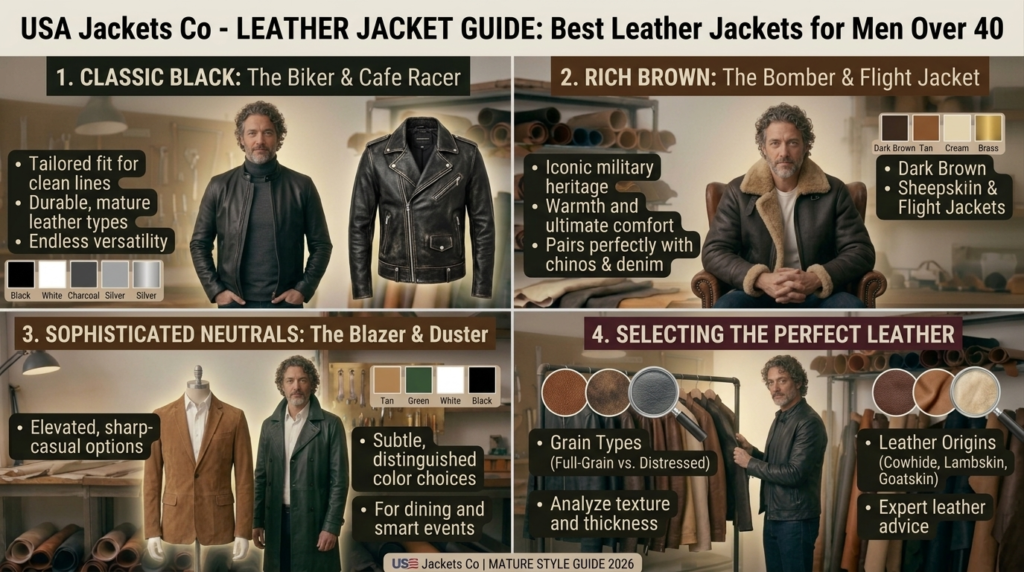
Quick answer: The best leather jacket for a man over 40 is the one that fits comfortably through the shoulders and chest, works with the clothes he already owns, and suits how he spends his time. A clean racer, understated bomber, classic café-racer, or restrained biker jacket can all work well. Age is not a dress code: choose by fit, lifestyle, material, and personal taste rather than rules about what men “should” wear.
Many buyers want a jacket that looks considered without feeling overly formal, follows the body without restricting movement, and can be worn for years rather than just one trend cycle. This guide explains which silhouettes to consider, how to style them, what to inspect before buying, and how to avoid common fit mistakes.
What makes a good leather jacket for men over 40?
A versatile jacket balances four things: proportion, comfort, construction, and usefulness. It should sit naturally on your shoulders, close without pulling, and leave enough room for the layers you actually wear. Its design should complement your wardrobe rather than require you to replace it.
- Proportion: The hem and sleeves should work with your height and build. A jacket need not be tight to look sharp.
- Comfort: Check the lining, weight, collar, arm movement, and how it feels while sitting or driving.
- Versatility: Black, dark brown, and medium brown are practical starting points if you want to wear one jacket often.
- Construction: Read the leather description and inspect stitching, seams, zipper movement, lining attachment, and pocket placement.
There is no single ideal cut for everyone. A relaxed fit may be right for a broad frame or layered outfits, while a trimmer silhouette can suit someone who prefers a neat profile. Comfort and personal preference should lead the decision.
5 leather jacket styles worth considering
1. The minimalist racer
A racer or café-racer-inspired jacket usually has a simple front, a close collar, and limited decoration. It is a strong option if you want a polished everyday jacket that does not dominate an outfit. Wear it with dark or mid-wash jeans, a crew-neck T-shirt, a fine-gauge knit, or chinos and a casual shirt.
Look for a body length that reaches around the hip and sleeves that finish near the wrist. A streamlined design is particularly useful when your wardrobe includes both casual and smart-casual pieces.
2. The classic bomber
A leather bomber has a more relaxed, sporty feel. Ribbed cuffs and a ribbed hem are common, though details vary by design. It works well with denim, straight-leg trousers, simple trainers, boots, and knitwear.
Check the hem carefully: a strong ribbed band can make a jacket sit higher or feel snug around the waist. If you prefer a longer line, compare the garment measurements with a jacket you already like before ordering.
3. The understated biker jacket
A biker jacket can add character without looking excessive. Traditional designs may feature an angled zip, lapels, snaps, or belt details; cleaner versions use fewer hardware elements. If you want a jacket for regular wear rather than a statement look, choose the amount of detailing that feels natural with your usual clothes.
Try it with a plain shirt or knit, dark jeans, and boots. Keep other pieces relatively simple so the jacket remains the focal point. If you ride a motorcycle, do not assume a fashion biker jacket is protective riding equipment: check for purpose-built construction, fit, armour compatibility, and relevant safety specifications.
4. The clean-cut casual jacket
A simple zip-front leather jacket with minimal seams and pockets is often the easiest to repeat across different settings. It can work for errands, casual dinners, travel, or a relaxed office where the dress code allows it. Look for a finish and colour that complement your shoes and belts rather than trying to match every item exactly.
5. The shearling or warm-weather-specific option
If you need a jacket for colder conditions, a shearling-style or insulated design may be more suitable than a thin, unlined fashion jacket. Warmth depends on the lining, fit, wind exposure, and what you wear underneath—not just the word “leather.” For mild climates or indoor-to-outdoor use, a lighter jacket may be easier to wear throughout the year.
Think about your local weather and how long you spend outside. A heavy jacket that is uncomfortable to carry or wear indoors may see less use than a lighter option with practical layers underneath.
How should a leather jacket fit?
Fit matters more than the number on the label. Sizes vary between brands and silhouettes, so use the product-specific size chart and measurements wherever possible.
- Shoulders: The shoulder seams should sit close to your natural shoulder edge. They should not droop far down the arm or dig in.
- Chest: Zip or fasten the jacket. The front should lie reasonably flat without pronounced pulling or strained seams.
- Arms: Reach forward, cross your arms, and lift them. Some movement in the body is normal, but the jacket should not make ordinary movement uncomfortable.
- Sleeves: Check where the sleeves finish with your arms relaxed. The ideal length depends on the cuff design and whether you will wear a watch or layer underneath.
- Body length: Compare the hem with your preferred trousers and the way you plan to wear the jacket. A bomber and a racer may intentionally sit at different lengths.
- Layering: Try the fit over a T-shirt and over the knit or shirt you expect to wear most often.
Do not buy a painfully tight jacket expecting it to stretch enough to correct the fit. Leather can relax with use, but the amount varies by hide, thickness, finish, construction, and wear. If you are between sizes, compare the actual garment measurements and ask the seller for advice.
For a more detailed checklist, read our leather jacket size guide and leather jacket buying guide.
Colours that are easy to wear after 40—and at any age
Colour should reflect your wardrobe and taste, not your age. If you want a first or frequently worn jacket, choose a shade that works with several outfits you already own.
| Colour | Works well with | Consider it if |
|---|---|---|
| Black | Dark denim, grey, white, black, navy, and boots | You want a crisp, versatile look with a little edge. |
| Dark brown | Blue denim, cream, olive, beige, and earth tones | You prefer a softer contrast than black. |
| Medium brown or tan | Navy, white, ecru, light denim, and muted greens | You want a relaxed jacket that stands out without bright colour. |
| Deep burgundy or other muted shades | Neutral trousers, simple knitwear, and understated shoes | Your wardrobe is mostly neutral and you want one distinctive piece. |
Before choosing, lay out two or three trousers, shoes, and tops you wear regularly. If the jacket works with most of them, it is more likely to earn a place in your weekly rotation. Our guide to leather jacket colours for men explores more combinations.
5 outfit formulas that feel current without chasing trends
Everyday casual
Pair a black or brown racer with a plain T-shirt, straight-leg jeans, and clean trainers or simple boots. The fit of the jeans and the jacket’s shoulder line do more for the outfit than extra accessories.
Smart casual
Wear a minimal leather jacket over a fine knit or Oxford-style shirt with chinos and understated leather shoes. Keep the jacket clean and avoid excessive hardware if the setting is more polished.
Weekend layers
Choose a bomber or relaxed zip-front jacket, a crew-neck sweatshirt or midweight knit, dark denim, and boots. Make sure the jacket has room for the extra layer without pulling across the back.
Dinner or evening
A dark, clean-cut jacket over a black, charcoal, or cream top creates a simple outfit. Choose trousers with a tidy fit and shoes that suit the venue. You do not need to dress head-to-toe in black for the look to feel cohesive.
Travel day
A lighter jacket with secure pockets, comfortable sleeves, and a lining suitable for the climate is useful for moving between transport, cafés, and outdoor stops. Avoid a fit that becomes restrictive when seated for a long time.
Leather and construction: what to check before paying
Do not judge quality from the product title alone. Product descriptions should explain the material, lining, closure, pocket arrangement, care, and available sizing. Terms such as “genuine leather” are broad and do not by themselves tell you the grade, finish, or likely feel of the hide.
- Material detail: Look for a clear description of the leather type and finish. Ask if a description is unclear.
- Stitching: Check for consistent seams, secure stress points, and no obvious loose threads in product photographs.
- Hardware: Zips should appear aligned and suitable for the design; snaps and buckles should be attached securely.
- Lining: Consider whether it is smooth, comfortable, and appropriate for your climate.
- Pockets: Check their position and depth for the items you carry. A pocket that looks good in a photo may not suit your daily needs.
- Care: Follow the garment’s own care instructions. Do not assume every leather finish can be cleaned the same way.
- Returns and delivery: Review the exchange policy, dispatch estimate, and any possible import charges before placing an international order.
If you are comparing options, explore the men’s collection, including styles such as the Voyager leather jacket and Alexander jacket. Check each product page for its own material, sizing, and availability details rather than assuming every style has identical features.
Common mistakes to avoid
- Choosing by age rules: There is no need to avoid a style solely because you are over 40. Judge the cut, detailing, and how you feel wearing it.
- Buying too small: A jacket that pulls across the chest or restricts movement is not improved by looking slim on a hanger.
- Going too large without intent: An oversized silhouette can work, but excess fabric at the shoulders and sleeves may look accidental if the rest of the outfit is fitted.
- Ignoring your existing wardrobe: A striking colour may be less useful if it clashes with most of your regular trousers and shoes.
- Assuming leather means warm: Construction, lining, wind, and layering all affect comfort in cold weather.
- Overlooking the return policy: Confirm measurements and terms before ordering, particularly when buying from another country.
Should you consider a custom leather jacket?
If standard sizes rarely fit your shoulders, chest, sleeve length, or torso proportion at the same time, a made-to-measure option may be worth exploring. It is also useful if you have a clear preference for colour, pockets, lining, or understated hardware. Before ordering, confirm which measurements are required, what changes are included, how approvals work, and whether custom orders can be returned or altered.
USA Jackets Co offers a custom leather jacket service for shoppers who want to discuss design and personalisation. Review the current terms and speak with the team before committing to a custom specification.
Frequently asked questions
Can a man over 40 wear a biker jacket?
Yes. Choose the level of hardware and detailing you enjoy, and style it with simple pieces if you want the jacket to be the main focus. There is no age limit on a particular silhouette.
Which leather jacket style is most versatile?
A minimalist racer, simple bomber, or clean zip-front jacket can be versatile. The best choice depends on your usual clothes, climate, and whether you prefer a structured or relaxed shape.
Should a leather jacket be tight when new?
It should feel secure without painful pressure or restricted movement. A little firmness can be normal, but do not rely on substantial stretching to correct a poor fit.
Is black or brown better for everyday wear?
Both can be versatile. Black creates a sharper contrast and pairs well with monochrome outfits; brown often works naturally with denim, cream, olive, and other earth tones. Choose based on the colours you already wear.
How long should a leather jacket be?
Many casual styles finish around the hip, but the right length varies by design and body proportion. Compare the listed back length with a jacket you already like and consider how it looks when you sit and move.
Can I wear a leather jacket to work?
In a casual or smart-casual workplace, a simple design can work with chinos, a knit, or a collared shirt. Follow your workplace dress code and choose a less decorated style for more formal environments.
Final checklist
Before buying, confirm the silhouette suits your everyday life, check shoulder and chest fit, test arm movement, choose a colour that works with your wardrobe, read the leather and lining details, and understand the care, delivery, and return terms. The best leather jacket for a man over 40 is not defined by age: it is the one that fits well, feels comfortable, and gets worn often.
