
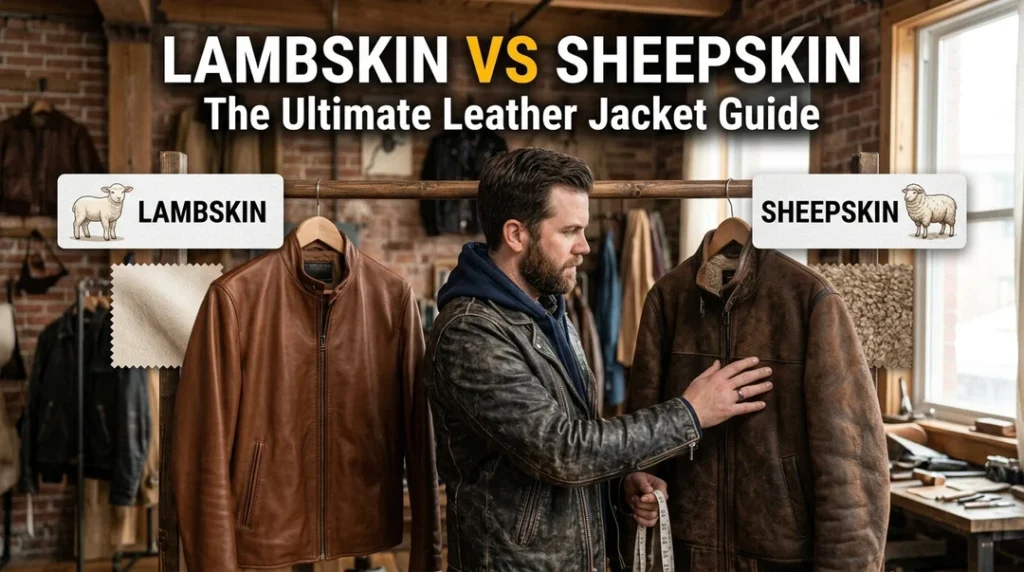
Lambskin vs Sheepskin Leather Jackets: A Practical Comparison
When shopping for a leather jacket, “lambskin” and “sheepskin” can sound like two completely different materials. In practice, both come from sheep, but the terms often describe different stages of the animal’s development, the thickness of the hide, and the kind of finish a jacket maker wants to achieve.
For most buyers, the real question is not which label sounds more premium. It is which leather suits the way you plan to wear the jacket. Lambskin usually feels lighter, softer, and more fluid. Sheepskin often offers a little more body, structure, and everyday resilience. The right choice depends on your climate, wardrobe, fit preference, and tolerance for visible wear.
Quick answer: lambskin or sheepskin?
| Feature | Lambskin | Sheepskin |
|---|---|---|
| Feel | Very soft and smooth | Soft, but usually slightly more structured |
| Weight | Lightweight | Light to medium weight |
| Drape | Fluid and easy to layer | More shape and body |
| Best for | Dressy jackets, fashion styles, mild weather | Daily wear, outerwear, versatile jackets |
| Wear resistance | Can mark or scratch more easily | Often better suited to regular use |
| Typical look | Refined, sleek, elegant | Classic, practical, slightly more substantial |
Choose lambskin if your priority is softness, lightness, and a polished silhouette. Choose sheepskin if you want a little more structure and a jacket that feels easier to wear regularly.
What is lambskin leather?
Lambskin is leather made from the hide of a young sheep. Because the hide has had less time to develop heavy fibers, it is typically fine-grained, supple, and noticeably smooth to the touch.
That softness is the main reason lambskin is popular in fashion jackets. It tends to fall close to the body without looking stiff, which makes it a strong choice for tailored cuts, cropped jackets, lightweight blousons, and minimalist designs.
Advantages of lambskin
- Exceptionally soft hand feel
- Comfortable for close-fitting silhouettes
- Lightweight for spring, autumn, and indoor-to-outdoor wear
- Usually develops an elegant, refined appearance
- Often feels comfortable from the first wear
Limitations of lambskin
- Can show scratches, scuffs, and pressure marks more easily
- May not be the best choice for rough daily use
- Very thin lambskin can feel less protective in cold or windy conditions
- Needs careful storage and handling
Lambskin is not automatically fragile. Quality, thickness, tanning, finishing, and construction all matter. A well-made lambskin jacket can last for years, but it rewards a little more care than a heavier hide.
What is sheepskin leather?
Sheepskin is leather made from a mature sheep hide. The term can also appear in discussions of shearling, where the wool remains attached to the hide. That is different from a standard smooth leather jacket, so always check whether the product is smooth sheepskin or wool-lined shearling.
Compared with lambskin, sheepskin often has a slightly fuller feel and more natural structure. It can still be soft and comfortable, but it is usually better suited to jackets that need to hold their shape through regular wear.
Advantages of sheepskin
- Good balance of softness and structure
- Versatile for everyday jackets and casual outerwear
- Often handles regular use better than very lightweight lambskin
- Works well in bomber, racer, overshirt, and classic zip-jacket designs
- Can provide a more substantial feel without becoming overly heavy
Limitations of sheepskin
- May feel less silky than premium lambskin
- Heavier grades can feel warm in mild climates
- Some finishes may look more textured or rustic than fashion-focused buyers expect
Lambskin vs. sheepskin leather jackets: the key differences
1. Softness and hand feel
Lambskin usually wins on immediate softness. If you want a jacket that feels almost fluid in the hand and moves easily with your body, it is often the better match.
Sheepskin can also be soft, especially when well tanned and finished, but it usually has more body. That extra structure can be useful when you want a jacket to look sharp rather than collapse around the torso.
2. Weight and layering
Lambskin is often the easier option for layering over a T-shirt, shirt, or thin knit. It can be comfortable during shoulder seasons and in climates where a thick winter coat would be too much.
Sheepskin varies widely. A lightweight sheepskin jacket may layer just as easily, while a heavier version can be more suitable for colder weather. The lining matters as much as the leather itself, so check both before buying.
3. Durability in everyday use
Durability is not determined by animal type alone. Hide selection, thickness, tanning, stitching, zippers, lining, and how the jacket is worn all affect service life.
In general, a medium-weight sheepskin jacket is a practical everyday option because it combines comfort with a little more resilience. Lambskin is often better when appearance, softness, and lightness matter more than hard use.
4. Appearance and drape
Lambskin tends to create a clean, sleek drape. This makes it popular for jackets with a refined, close-to-body shape.
Sheepskin tends to create a more defined outline. It can look especially good in classic outerwear shapes where the collar, shoulders, cuffs, and hem need to hold their form.
5. Price
Price depends on leather grade, finishing, craftsmanship, lining, hardware, and brand positioning. Lambskin is not automatically more expensive, and sheepskin is not automatically cheaper. Compare the full specification rather than judging by the leather name alone.
Which leather is better for different lifestyles?
For office-to-evening dressing
Lambskin is often a strong choice for a polished wardrobe. Its smooth finish pairs easily with tailored trousers, dark denim, knitwear, and minimalist shoes.
For everyday casual wear
Sheepskin is usually the safer all-rounder if the jacket will be worn frequently with jeans, boots, sneakers, or layered casual outfits. Its extra structure can help it keep a balanced shape through repeated use.
For travel
Choose based on your trip rather than the label. A lightweight lambskin jacket can be excellent for airports and city breaks because it packs and layers easily. A medium-weight sheepskin jacket may be better for cooler destinations where you want more coverage.
For motorcycle use
For motorcycle riding, focus on the complete garment: leather thickness, seam construction, abrasion-focused design, fit, closures, and protective compatibility. Neither lambskin nor sheepskin should be treated as a substitute for purpose-built protective motorcycle gear.
For colder weather
Look at the lining, insulation, length, cuff design, and collar before choosing the hide. A lined sheepskin jacket may provide more warmth than an unlined lambskin jacket, but a heavily lined lambskin garment can also be comfortable in cool weather.
How to judge quality beyond the leather label
Whether you choose lambskin or sheepskin, inspect the whole jacket:
- Grain and surface: Look for a consistent finish without excessive plastic shine.
- Stitching: Seams should be even, secure, and free from loose threads.
- Hardware: Zippers, snaps, and buttons should operate smoothly.
- Lining: It should sit flat and be attached cleanly at the hem and sleeves.
- Pattern balance: Panels should look proportionate and symmetrical.
- Fit: The shoulders should sit correctly, and the jacket should close without pulling.
- Construction details: Check pocket placement, cuff finish, collar shape, and hem stability.
A well-constructed jacket in the right leather will usually outperform a poorly made jacket with a more impressive-sounding label.
Care tips for lambskin and sheepskin jackets
Both leathers should be protected from unnecessary moisture, heat, and friction. Keep the jacket on a broad hanger, store it away from direct sunlight, and avoid overcrowding it in a wardrobe.
If the jacket becomes damp, let it dry naturally at room temperature. Do not place it on a radiator or use a hair dryer. Follow the care instructions supplied with the garment, and use a leather specialist when professional cleaning is required.
Lambskin benefits from especially careful handling because its smooth surface can show marks quickly. Sheepskin still needs care, even if its slightly fuller feel makes it seem more rugged.
Frequently asked questions
Is lambskin better than sheepskin?
Neither is universally better. Lambskin is usually better for softness, lightness, and a refined drape. Sheepskin is often better for structure, versatility, and regular everyday wear.
Is sheepskin the same as shearling?
No. Sheepskin refers to leather made from a mature sheep hide. Shearling usually means the wool remains attached to the hide. Product descriptions should specify whether the garment is smooth leather or wool-lined shearling.
Which is warmer, lambskin or sheepskin?
The lining, garment weight, length, and construction usually have a bigger effect on warmth than the leather name alone. Compare the full jacket specification.
Does lambskin scratch easily?
It can show scratches and pressure marks more readily than a heavier, more textured leather. Careful storage and avoiding rough surfaces can reduce visible wear.
Can I wear a lambskin jacket every day?
Yes, provided the jacket is well made and you are comfortable giving it sensible care. It is best suited to normal urban wear rather than rough or highly abrasive use.
Final verdict
Choose lambskin when you want a lightweight, soft, elegant jacket with a fluid silhouette. Choose sheepskin when you want a little more structure and a versatile jacket for frequent wear.
The best purchase is the one that matches your climate, routine, wardrobe, and preferred fit. Look beyond the leather label, compare the lining and construction, and choose a jacket you will genuinely enjoy wearing often.
