
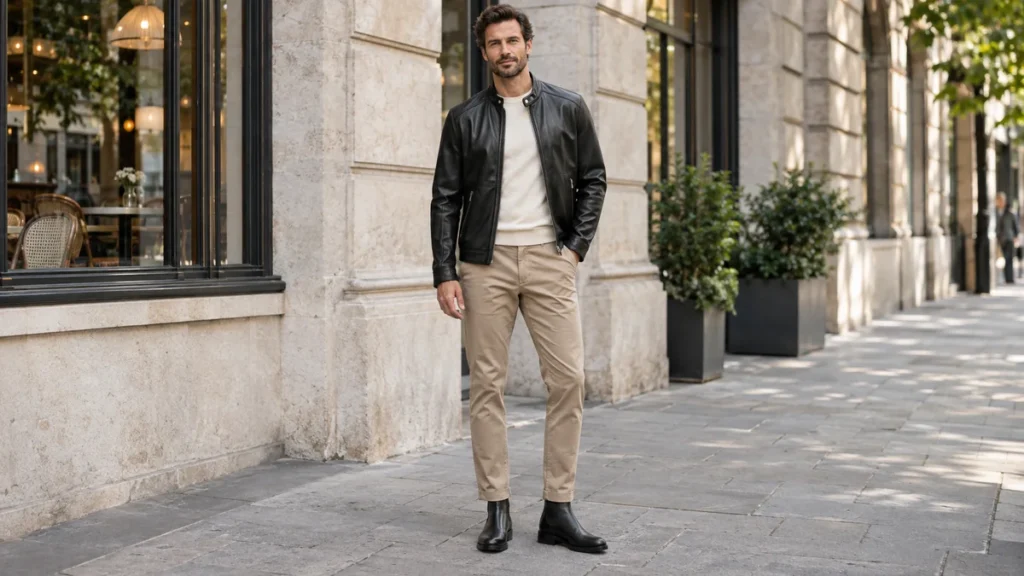
Can you wear a leather jacket with chinos? Absolutely. The easiest smart-casual combination is a clean café racer or simple leather bomber, straight or gently tapered chinos, a plain knit or Oxford shirt, and understated shoes. The key is to balance the jacket’s texture with trousers that fit neatly without looking like suit pants.
Chinos sit between jeans and tailored trousers: less rugged than denim but more relaxed than formal wool pants. That middle ground is precisely why they work with leather. A well-chosen jacket gives the outfit character, while chinos soften its edge. The result is useful for dinners, creative workplaces, weekends, and travel, provided the occasion’s dress code allows leather outerwear.
Start with the right leather jacket silhouette
A café racer is the easiest starting point because its straight zipper, short collar and restrained hardware echo the clean lines of chinos. A bomber feels slightly sportier, especially with ribbed cuffs and a relaxed waistband. A minimalist trucker can work too, particularly in suede. A heavily embellished biker jacket is not forbidden, but it shifts the outfit toward casual and makes polished shoes harder to coordinate. Choose the shape based on the setting rather than assuming every leather jacket dresses up equally well.
For a smart-casual dinner, select a jacket that closes smoothly over a shirt or lightweight knit. For weekend wear, a softer bomber over a T-shirt is more comfortable. Pay attention to the hem: a jacket ending near the waistband generally balances straight or tapered chinos better than an unusually long, bulky coat.
Black leather jacket with beige chinos
Black and beige is a straightforward contrast. The dark jacket anchors the outfit while the light trousers keep it from looking heavy. Add a white crewneck T-shirt for a relaxed version or a charcoal fine-gauge sweater for evening. White minimalist sneakers create an approachable finish; black Chelsea boots make it sharper.
Avoid an overly tight black jacket with extremely skinny beige chinos. That combination exaggerates proportions and can look dated. Aim for a jacket that follows the shoulders and chinos that fall cleanly from hip to ankle. A dark belt is useful when the shirt is tucked in, but it does not have to match every piece of hardware.
Brown leather jacket with navy chinos
A brown leather jacket and navy chinos create a subtle contrast without relying on bright colors. Cognac leather reads warmer and more casual; dark chocolate feels quieter. A cream henley or light blue Oxford shirt helps separate the two deeper shades. Brown suede chukkas or plain leather boots keep the palette cohesive.
When the jacket is distressed or visibly textured, keep the trousers smooth and simple. When the jacket has a polished finish, washed cotton chinos can add useful softness. Do not force the shoes to be exactly the same brown as the jacket; related warm tones are usually enough.
Tan suede jacket with olive chinos
Tan suede and olive chinos suit relaxed smart-casual wardrobes because both colors are earthy. The brushed surface of suede adds texture, while olive provides a grounded alternative to beige. Wear a white or oatmeal T-shirt underneath and finish with dark brown boots or off-white sneakers.
Suede requires different care from smooth leather. It can show water marks and surface changes more readily, so choose it for appropriate weather and follow the jacket’s care label. Our suede versus smooth leather guide explains the practical trade-offs.
Charcoal chinos with a dark brown racer
Charcoal is an overlooked chino color. It combines the versatility of black with a slightly softer appearance, particularly beside dark brown leather. A grey or ivory knit adds a light middle layer and keeps the outfit from becoming a block of dark tones.
This combination works particularly well when you prefer understated clothing. Choose boots with a clean toe shape rather than heavily distressed work boots if you want a refined result. A watch or simple belt can finish the look without requiring a scarf, chain or multiple statement accessories.
Choose chino fit before choosing footwear
Straight-fit chinos are the most flexible because they work with sneakers, loafers, chukkas and Chelsea boots. A gentle taper can look tidy if the calves are not constricted. Relaxed chinos work with a roomier bomber but may overwhelm a very slim racer jacket. Very skinny trousers often create an unbalanced silhouette beside structured leather.
Check the rise and the hem while standing and sitting. A mid-rise typically keeps the jacket-to-trouser transition neat. The hem can touch the shoe lightly or sit just above it; excessive pooling hides the footwear and makes a deliberate outfit look accidental. Tailoring the hem is often more effective than replacing an otherwise well-fitting pair.
What to wear underneath
For casual days, a heavyweight plain T-shirt or simple henley is enough. For smart casual, try an Oxford shirt, merino crewneck or fine turtleneck. Keep the collar arrangement tidy: a large shirt collar fighting with a stand collar can make the neckline crowded. A lightweight knit often solves this.
If the jacket is fitted, try it over the actual layer you intend to wear. You should be able to zip it without horizontal pulling across the chest or a tight sensation at the upper arms. A leather jacket can soften over time, but it should not need painful stretching to become wearable. For more checks, consult our leather jacket buying guide.
Shoes that make chinos and leather work together
Minimal leather sneakers make the outfit modern and relaxed. Chelsea boots add a clean continuous line, especially with a modest trouser opening. Chukka boots sit in the middle and are especially compatible with brown jackets. Loafers can work with a minimal racer and pressed chinos, but look less natural with a hardware-heavy biker.
Choose footwear by the occasion. For an informal office, understated boots or loafers may be appropriate; for a city weekend, sneakers are often more practical. Avoid mixing extremely formal, high-shine dress shoes with a very distressed jacket unless the contrast is deliberate and the rest of the outfit supports it.
Seasonal combinations for spring, autumn and winter
In spring, use lightweight chinos and a breathable shirt under an uninsulated leather jacket. In autumn, switch to a fine knit, brushed chinos and boots. In winter, a leather jacket can be part of a layered outfit, but warmth depends on its lining, the clothing beneath it and local conditions—not simply on whether it is genuine leather.
When traveling, carry a compact layer that can be removed indoors. Leather is not automatically waterproof, so plan for rain separately. A jacket with enough room for a thin sweater is more useful across seasons than one that fits only over a T-shirt.
Common styling mistakes and how to fix them
The most common problem is conflicting levels of formality: a sharply pressed pair of chinos, glossy dress shoes and a heavily distressed biker jacket may not look intentional. Another is poor proportion, such as a short tight jacket over low-rise, baggy trousers. Too many competing colors can also distract from the leather.
Fix these issues by simplifying one component at a time. Choose neutral chinos, limit the outfit to two or three main colors, and keep footwear aligned with the occasion. A neat hem and correctly sized jacket will usually make a bigger difference than an expensive accessory.
A five-outfit starter rotation
Build five combinations from one jacket: beige chinos and a white tee for Saturday; navy chinos and an Oxford for a casual meeting; charcoal chinos and a fine knit for dinner; olive chinos and a cream henley for travel; and black chinos with a grey roll-neck for evening. These are templates, not strict rules.
If you own only one jacket, black is highly adaptable with beige, grey and olive chinos; brown is particularly versatile with navy, cream and charcoal. Before buying a second jacket, check whether different trousers and layers already give you enough variety. The first-time buyer style guide can help you choose a shape.
FAQ: Can you wear a leather jacket with chinos to work?
Yes, where the workplace allows smart-casual dress. A clean racer, plain shirt and well-fitting chinos are more suitable than a heavily patched riding jacket. Check the actual office dress code, especially for client meetings.
FAQ: Are black chinos better than khaki? Neither is universally better. Black feels more tonal with a black jacket; khaki creates contrast and often looks more relaxed. Choose based on the shoes and shirts you already own.
FAQ: Should your belt match your leather jacket?
No exact match is required. If a belt is visible, it is usually more coherent to relate it to the shoes. Different shades of brown can work together, particularly when the outfit has another neutral color to connect them.
FAQ: What leather jacket is most versatile with chinos? A clean café racer is a strong option because it avoids excessive hardware and pairs with T-shirts, knitwear and collared shirts. Fit and personal style still matter more than the label.
Final buying checklist
Before ordering, check the shoulder width, zipped chest room, sleeve length, jacket hem and lining. Then imagine at least three outfits using chinos you already own. If the jacket works only with one pair of trousers or requires buying several new pieces, it may not be the most practical choice.
For inspiration on silhouette differences, see our guide to leather jacket styles. The best smart-casual look is not the most complicated one; it is the one whose fit, colors and level of formality agree.
