
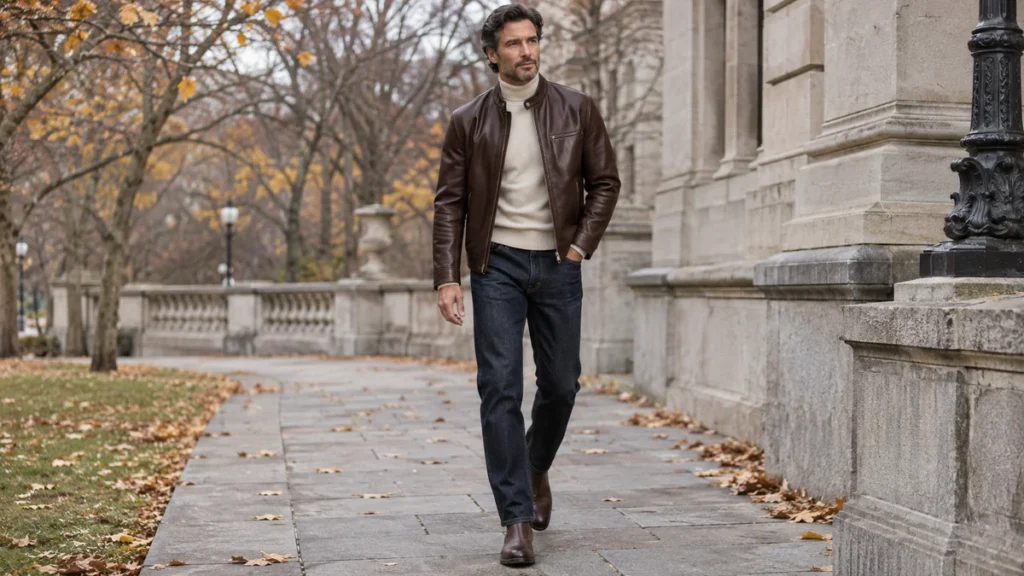
The best way to layer a leather jacket for fall and winter is to combine a comfortable base layer, a suitably warm midlayer, and a jacket with enough room to move. Leather is not automatically insulated, waterproof, or adequate for severe cold. Choose the outfit for the actual weather rather than the appearance alone.
Understand your jacket’s warmth
A thin fashion jacket with light lining may suit mild autumn weather but be inadequate near freezing. A shearling-lined style can offer more insulation, though weight and bulk increase. Wind, rain, activity level, and time spent outdoors all affect comfort. For severe cold or sustained rain, use suitable technical outerwear.
Build a three-layer system
Start with a comfortable base layer, add a fine-gauge knit or other insulating midlayer, then finish with the leather jacket. On mild days, omit the middle layer. On colder days, prioritize warmth without stuffing thick fabric into tight sleeves. The system should allow you to sit, walk, and reach comfortably.
Autumn look: tee and overshirt
Wear a plain T-shirt under a lightweight flannel overshirt, topped with a leather bomber. Add dark jeans and boots. Choose an overshirt that lies flat at the shoulders. Heavy flannel can make a close-fitting racer feel restrictive, so test the complete outfit rather than the jacket alone.
Autumn look: knit and chinos
A cream or grey fine-knit crewneck under dark brown leather creates a balanced outfit with navy chinos. Black leather with charcoal knit and grey trousers gives a more tonal appearance. Avoid sweater hems that hang far below a cropped jacket unless the layered proportions are deliberate.
Winter look: thermal and wool
For a cold dry day, combine a suitable base layer with a fitted wool or wool-blend sweater. Choose a leather jacket with sufficient chest and sleeve room. If the zipper pulls, the collar rides upward, or movement is restricted, change the midlayer or use a roomier coat.
Hoodies under leather
A medium-weight hoodie can look good beneath a relaxed bomber or racer. Keep the hood smooth behind the collar and avoid excessive bulk around the neck. Pair with straight jeans and simple boots or sneakers. This combination is generally more casual than a turtleneck and tailored trousers.
Turtlenecks and mock necks
A thin turtleneck offers neck coverage and a refined appearance. Try black leather with charcoal knit and tailored trousers, or brown leather with a cream mock neck and dark denim. Thick cable-knit collars can crowd a fitted jacket, so fine-gauge fabrics are usually easier to layer.
Choose the right jacket cut
Bombers may offer more body room, although ribbed hems can grip bulky sweaters. Café racers often suit thinner layers. Biker jackets introduce lapels and hardware that may compete with scarves. Shearling jackets already include insulation. Compare measurements rather than automatically sizing up for winter.
Use accessories strategically
A wool scarf, gloves, warm socks, and a suitable hat can improve comfort without adding another thick torso layer. Avoid stuffing pockets until the jacket hangs unevenly. Be mindful that bag straps may rub against delicate finishes, especially suede and nubuck.
Protect leather from wet weather
Leather is not inherently waterproof. If it becomes damp, blot gently and dry naturally away from radiators or direct heat. Follow the specific care instructions for the leather finish. Suede and nubuck need different treatment from smooth finished leather. Use a raincoat or umbrella during sustained precipitation.
Avoid five layering mistakes
Do not force a thick hoodie into a fitted racer, assume a thin leather jacket replaces an insulated winter coat, stack several long hems without considering proportions, choose style over mobility, or expose delicate leather to prolonged wet weather. Zip the jacket and test sitting and reaching before leaving home.
Frequently asked questions
Can you wear a hoodie under leather? Yes, if the jacket has room and the hood sits comfortably. Is a leather jacket warm enough for winter? It depends on lining and conditions; many lightweight jackets are not. What sweater works best? Fine-gauge crewnecks and mock necks are versatile. Should you size up? Only after checking measurements and the intended layers.
Final advice
Choose a jacket that suits your routine, fits the layers you actually wear, and can be maintained properly. Browse USA Jackets Co for relevant styles and check each garment’s materials and size information before ordering.
