
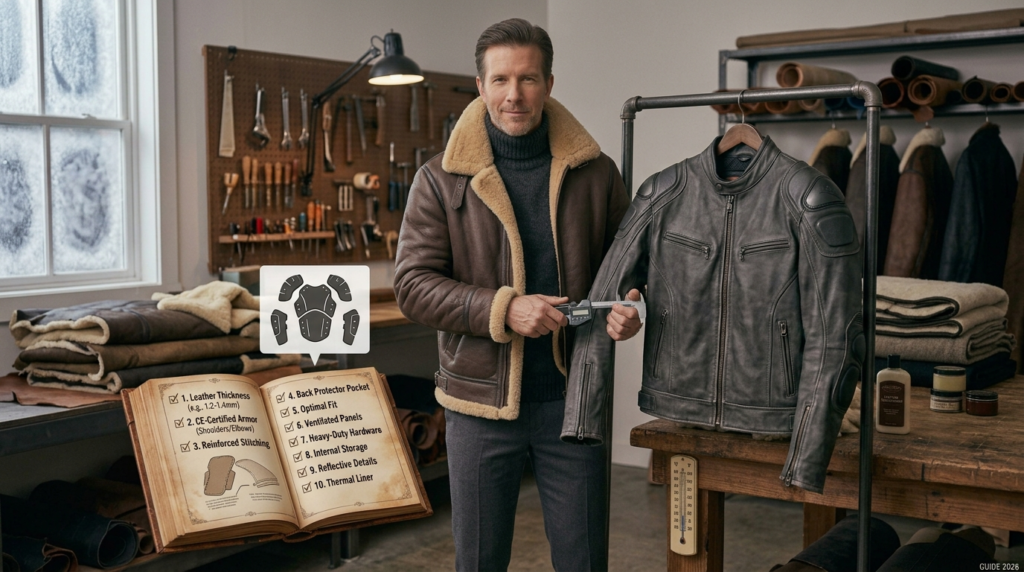
How to choose a leather jacket for motorcycle riding starts with one key distinction: a jacket made to look like riding gear is not necessarily protective motorcycle equipment. For regular road use, compare the jacket’s protective design, fit in a riding position, abrasion-resistant construction, armour, stitching and suitability for your climate before considering colour or styling.
A leather motorcycle jacket can combine classic style with useful abrasion resistance, but no garment can eliminate the risk of injury. The safest choice is a jacket specifically designed and tested for motorcycle use, worn with a suitable helmet, gloves, trousers and boots.
1. Decide How and Where You Ride
Start with your usual riding rather than choosing a jacket based on appearance alone. A jacket for short city commutes has different priorities from one for highway journeys, sport riding or touring.
- Daily commuting: Look for practical pockets, comfortable closures, visibility details and a fit that works when you repeatedly get on and off the bike.
- Highway riding: Prioritise secure construction, coverage, stable armour placement and a cut that stays in position at speed.
- Sport riding: A closer cut, pre-curved sleeves and room to reach the handlebars can make the riding position more comfortable.
- Touring: Consider ventilation, weather management, useful storage and compatibility with riding trousers.
- Hot climates: Ventilation matters. A perforated leather jacket may help airflow, but confirm that perforation does not compromise the garment’s intended protective design.
Be realistic about the weather you encounter most often. Leather can be heavy and may not dry quickly after getting wet. Textile motorcycle jackets can be a better fit for riders who need built-in waterproofing, removable thermal liners or broader all-season versatility.
2. Make Sure It Is a Motorcycle Jacket, Not Just a Fashion Jacket
This is the most important check in the buying process. A casual leather jacket may have a similar silhouette to riding gear but lack tested abrasion resistance, impact protectors, reinforced seams or a pattern designed for a riding posture.
Look for clear product documentation identifying the garment as motorcycle protective equipment. Where applicable in your market, check its motorcycle garment certification and protective class, such as the relevant EN 17092 marking used for motorcycle clothing in Europe. Read the label and manufacturer documentation rather than relying on phrases such as “rider style,” “biker look” or “premium leather.”
Government road-safety guidance from the SAAQ guide to motorcycle helmets and protective clothing explains why protective clothing, fit and appropriate materials matter. Use official guidance and the manufacturer’s documentation to check any safety claim.
3. Check the Leather and Outer Construction
Leather is valued in motorcycle clothing for its abrasion resistance, but the word “leather” alone does not prove that a jacket will perform well in a crash. Hide type, thickness, treatment, panel design, seam construction and testing all affect performance.
- Ask what the shell is made from: The product description should identify the material clearly rather than use vague claims.
- Inspect high-impact areas: Shoulders, elbows and other exposed zones should have appropriate protective construction.
- Look for secure seams: Strong, purpose-built seams and reinforced construction are important. Decorative stitching is not evidence of protective strength.
- Check the closures: The main zip, cuffs and waist closure should fasten securely and remain comfortable when you lean forward.
- Do not judge by thickness alone: A thicker-feeling jacket is not automatically safer unless its materials and construction are appropriate and tested.
Full-grain, top-grain and other leather labels describe aspects of the material, but they are not substitutes for motorcycle garment testing. Choose documented protective performance over a marketing label.
4. Verify the Armour Included
Impact protectors and an abrasion-resistant shell do different jobs. The shell helps resist damage from sliding; armour is designed to reduce impact forces at specific body areas. One does not replace the other.
Before buying, confirm whether the jacket includes protectors or only has pockets for them. Check the shoulders and elbows first, then see whether a compatible back protector is included or available separately. If the manufacturer lists a recognised protection standard and level, verify the details on the product label or official documentation.
- Confirm the shoulder and elbow protectors are included or budget for compatible inserts.
- Check whether the back protector is included, optional or absent.
- Make sure each protector stays in the intended position when you move.
- Use only protectors specified as compatible by the jacket’s manufacturer.
Do not treat ordinary foam padding as equivalent to certified impact protection. If a listing is unclear about armour, ask the seller before ordering.
5. Get the Fit Right in a Riding Position
A motorcycle jacket should fit differently from a relaxed fashion jacket. It needs to allow movement while keeping its protective features correctly positioned. A jacket that feels fine while standing upright may pull across the shoulders or expose your wrists when you reach for the handlebars.
Try these checks while wearing the layers you normally ride in:
- Zip the jacket fully and close the cuffs.
- Bend your elbows and reach forward as if holding handlebars.
- Check that the shoulder and elbow protectors remain over the intended areas.
- Make sure the sleeves still cover your wrists in the riding position.
- Turn your torso and move your arms without sharp pulling or restricted control.
- Check the back and waist coverage when leaning forward.
- If possible, sit on your motorcycle to assess the jacket in your actual posture.
Choose a secure fit without buying a jacket so tight that it restricts movement or breathing. Do not assume leather will stretch enough to fix a poor fit. It may soften and mould slightly with use, but the protectors and sleeves must be correctly positioned from the start.
6. Choose a Style That Matches Your Riding
Sport and race-inspired jackets
These often have a close cut, pre-curved sleeves and a shape designed for a forward-leaning posture. Check the range of movement and the intended riding use rather than assuming that a race-inspired appearance means the jacket has a certified protective rating.
Classic motorcycle and cafe racer jackets
A cafe racer silhouette can suit everyday riding and casual wear. If protection is the goal, verify the armour, seams, fit and certification separately. A minimalist appearance should not mean missing protective features.
Cruiser and touring styles
These may offer a more relaxed cut and practical pockets. Make sure the sleeves and torso still fit securely in your riding posture, and check how the jacket works with gloves and riding trousers.
Fashion biker jackets
Asymmetrical zips, lapels and decorative belts create a familiar biker look, but a fashion jacket should not be assumed to provide motorcycle protection. Use it for casual wear unless the exact garment is designed and documented for riding.
7. Think About Weather, Ventilation and Layers
The best motorcycle jacket is one you can wear comfortably in the conditions you actually ride in. Leather can feel warm in cool weather and uncomfortable in high heat, especially when it lacks ventilation. A removable thermal liner may help in cooler conditions, while vents or perforated panels may improve airflow in warmer weather.
For wet weather, check whether the jacket has a tested waterproof membrane or whether you will need a separate rain layer. Do not assume leather is waterproof. Follow the care instructions after exposure to rain, and let wet leather dry naturally away from direct heat.
Layering should not push the protectors out of position or make the jacket too tight. Try the jacket with your normal base and mid-layers, and confirm that you can still move freely.
8. Inspect Stitching, Zips and Practical Details
Small details affect everyday usability and long-term wear. Inspect the garment carefully and ask questions if the product page does not show the relevant areas.
- Stitching should look consistent, secure and appropriate for riding gear.
- The main zip should close smoothly and stay secure.
- Cuffs should adjust comfortably over or alongside your riding gloves.
- The collar should not rub or interfere with helmet movement.
- Pockets should close securely and should not interfere with protectors.
- Reflective details may improve visibility, but they do not replace lights or safe riding practices.
- Follow the care instructions and use products intended for the jacket’s specific leather finish.
9. How Much Should You Spend?
Compare what is included rather than choosing solely by price. Two jackets can look similar but differ in certification, armour, seam construction, weather features, fit options and after-sales support. A lower-priced jacket may require you to buy compatible protectors separately; a higher price is not, by itself, proof of better protection.
Before paying, check the full specification, the size chart, delivery estimates, return policy and whether the seller can answer detailed questions about safety features. If the listing makes strong protective claims but provides no supporting documentation, treat that as a reason to pause.
10. A Motorcycle Leather Jacket Buying Checklist
Use this checklist before you place an order:
- Is the exact jacket designed for motorcycle riding rather than only fashion?
- Can you verify the relevant protective standard or garment class, where applicable?
- Are the leather and construction details clearly described?
- Are shoulder and elbow protectors included and correctly positioned?
- Is a compatible back protector included or available?
- Does the jacket fit correctly while reaching forward on the bike?
- Do the sleeves cover the wrists and the torso stay covered?
- Are the seams, zips, cuffs and closures secure?
- Does ventilation or insulation suit your climate?
- Do you understand the care, sizing, delivery and return policies?
USA Jackets Co: Check the Product Details Carefully
If you are comparing leather styles at USA Jackets Co, start by reading each product’s material and construction information rather than assuming every leather jacket is suitable for riding. The Blaise Padded Riding Jacket is one riding-oriented option to review for its listed shell and removable inner vest. Confirm the current product details and any protective equipment included before using a jacket on a motorcycle. If you want a jacket mainly for casual outfits, browse with that purpose in mind and do not treat fashion styling as a safety certification.
Frequently Asked Questions
Is any genuine leather jacket suitable for motorcycle riding?
No. Genuine leather describes a material, not the protective performance of the whole garment. Look for a motorcycle-specific jacket with documented construction, appropriate armour and a fit that keeps protectors in place.
Should a motorcycle jacket feel tight?
It should fit securely without restricting movement. Test it in a riding position and check that the shoulder and elbow protectors remain correctly placed and the sleeves cover your wrists.
Is leather safer than textile?
Neither material is automatically safest in every situation. Protective performance depends on the complete garment, its tested construction, armour, fit and intended use. Compare documented specifications rather than relying on material alone.
Do I need a back protector?
Check whether the jacket includes a compatible back protector or only a pocket for one. Follow the manufacturer’s guidance and verify the protector’s rating and compatibility before use.
Can I wear a motorcycle jacket as everyday clothing?
Yes, if it is comfortable and appropriate for the occasion. However, keep in mind that protective jackets can be heavier, more structured and warmer than ordinary fashion jackets. Casual leather jackets should not be used as a substitute for protective riding equipment.
Final Advice
When choosing a leather jacket for motorcycle riding, put verified protection and fit ahead of styling. Confirm the garment is designed for riding, check its protective features and armour, test the fit in your riding posture, and choose ventilation and weather features that match your climate. A classic silhouette is a bonus—but clear specifications and a secure fit are the essentials.
