
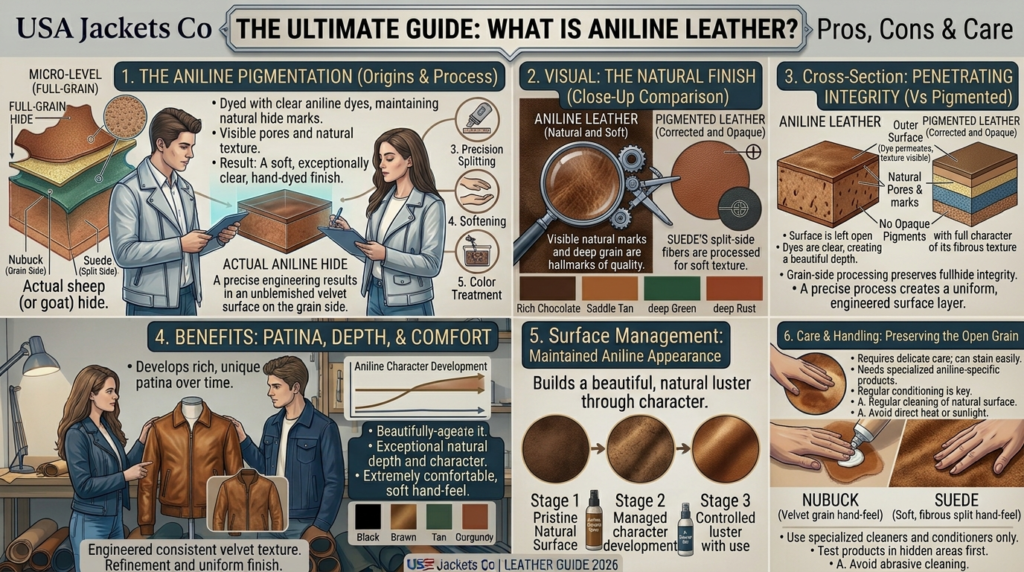
Aniline leather is leather coloured with transparent, soluble dyes that allow much of the hide’s natural surface to remain visible. Unlike heavily pigmented leather, it is not covered with an opaque colour layer that hides most natural marks. This gives aniline leather a distinctive, natural appearance, but it also means that stains, scratches, sunlight and moisture can be more noticeable.
For a leather-jacket buyer, aniline is best understood as a dyeing and finishing approach—not an animal type, a leather grade or a guarantee of overall quality. The hide, tanning, thickness, construction and final treatment still matter. Understanding those details helps you decide whether the look and care requirements suit the way you will wear the jacket.
What Is Aniline Leather?
Aniline leather is coloured using dyes that penetrate the leather without creating an opaque pigment coating over the surface. Because the finish is transparent, natural grain features such as pores, wrinkles, small scars and variations in tone can remain visible.
This natural appearance is one of its main attractions. Rather than making every panel look identical, aniline finishing allows the character of the individual hide to show through. The result can feel rich and authentic, although it may also reveal differences between panels that a more heavily finished leather would conceal.
The word “aniline” describes how the leather is coloured and finished. It does not by itself tell you whether the hide is lambskin, cowhide or goatskin, or whether it is full-grain or another grade. Ask for the complete material specification rather than relying on one label.
How Is Aniline Leather Made?
After the hide has been prepared and tanned, it is dyed in a bath or process using transparent aniline dyes. The colour enters the leather while leaving its natural surface features visible. The leather may then receive a light finishing treatment, depending on the product specification, but traditional full-aniline leather has little or no opaque surface pigment.
Because the finish does not hide every natural mark, the selection and sorting of hides are important. Marks that might be covered by a more opaque finish can remain visible. Colour can also vary subtly across the surface, especially where the hide has different natural characteristics.
Manufacturers use different finishing systems, so two jackets both described as aniline may not have identical feel, protection or appearance. If you are buying online, ask whether the leather is full-aniline or semi-aniline and what protective topcoat, if any, has been applied.
Full-Aniline vs Semi-Aniline vs Pigmented Leather
These terms describe different levels of surface treatment. They are useful when comparing jackets because they indicate how much of the natural grain remains visible and how much surface protection may be present.
| Finish | Typical appearance | What buyers should know |
|---|---|---|
| Full-aniline | Natural grain and hide character remain highly visible | Often has a very natural hand feel, but marks and spills may show more readily |
| Semi-aniline | Natural grain remains visible beneath a light protective or pigment finish | Offers a balance between natural appearance and added surface consistency or protection |
| Pigmented | More uniform colour with a more substantial surface coating | Can be easier to keep visually consistent, though the feel and appearance are less natural |
These are general descriptions, not a universal recipe. The exact coating, dye system and performance depend on the tannery and manufacturer. A thin protective finish does not automatically make a leather jacket waterproof or stain-proof.
For a closer look at the related finish, see the custom leather jackets page, which lists aniline and semi-aniline among the available leather finishes.
What Are the Advantages of Aniline Leather?
1. Natural grain remains visible
Transparent dye allows the leather’s own surface character to show. Natural pores, grain variation and small marks can give each panel an individual appearance.
2. A soft, authentic hand feel
Because full-aniline leather does not rely on a heavy opaque coating, it can retain a close connection to the feel of the hide itself. The actual softness still depends on the animal hide, tanning, thickness and finishing.
3. Rich colour depth
Transparent dyes can create colour that looks integrated with the leather rather than sitting like paint on top. Subtle changes in tone may add depth, particularly on darker browns and other saturated shades.
4. Character can develop with use
Some aniline leathers develop a visible patina as they are handled and worn. Changes in sheen, tone and surface character may appeal to people who prefer a jacket that looks lived-in rather than perfectly uniform.
What Are the Disadvantages of Aniline Leather?
It can absorb spills more readily
With less surface protection, liquids and oils may penetrate or leave visible marks. A small spill can change the colour of an area, and rubbing may spread the mark.
Scratches and natural marks remain visible
The same transparency that reveals attractive grain also reveals imperfections. Contact with rough surfaces, sharp objects or bag hardware may leave marks that are difficult to remove.
Colour can change with light and use
Prolonged direct sunlight can contribute to fading. Repeated contact at cuffs, collars and other high-use areas may also change the appearance over time.
It needs careful maintenance
Aniline leather is not necessarily difficult to own, but it rewards careful handling. Cleaning products that work on coated leather may darken, stain or otherwise alter an open-pore aniline surface.
Is Aniline Leather Durable?
Aniline leather is not automatically weak or short-lived. Durability depends on the quality of the hide, tanning, thickness, stitching, panel construction, lining and how the jacket is used. The less-protected surface, however, is generally more vulnerable to visible staining and scratching than a more heavily finished leather.
This distinction matters: a jacket can remain structurally sound while showing marks on its surface. Some buyers enjoy that natural ageing; others prefer a more uniform appearance. Decide which outcome you want before purchasing.
For frequent commuting, unpredictable weather or rough daily use, a more protected finish may be easier to manage. For careful wear in relatively dry conditions, aniline may be appealing if you value natural grain and are comfortable with visible changes over time.
How to Care for an Aniline Leather Jacket
- Follow the maker’s instructions. Confirm that the jacket is full-aniline or semi-aniline and use care advice that matches that finish.
- Remove dust gently. Use a clean, soft, dry cloth. Avoid vigorous rubbing, which can alter the surface sheen.
- Blot spills rather than rubbing. Press a clean, absorbent cloth gently against fresh moisture. Do not scrub or apply heat.
- Let damp leather dry naturally. Hang the jacket on a broad hanger in a ventilated place, away from radiators, hair dryers and direct sunlight.
- Patch-test any care product. Use only a cleaner or conditioner specifically recommended for aniline leather. Test it on a hidden area and allow it to dry before treating a visible panel.
- Keep it away from prolonged sunlight. Store it in a cool, dry place and avoid leaving it in a hot car or beside a heater.
- Use professional help for difficult stains. Ink, oil, dye transfer and large water marks may need a leather-care specialist familiar with aniline finishes.
Avoid household soap, alcohol, disinfectant wipes, general-purpose polish and untested oils. They can change the colour or surface feel. Do not machine-wash or tumble-dry a leather jacket.
How to Choose an Aniline Leather Jacket
Start by asking what you want from the surface. If you like visible grain, natural variation and the possibility of patina, aniline may suit you. If you prefer an even colour and less visible surface marking, compare semi-aniline or a suitable pigmented finish.
- Ask for the exact finish. Confirm whether the jacket is full-aniline, semi-aniline or pigmented.
- Check the hide type and grade. Ask whether it is lambskin, cowhide, goatskin or another leather, and request a clear grade description where available.
- Review real product photographs. Look for consistent panel colour while remembering that natural variation is normal.
- Understand the care commitment. Ask what to do if the jacket gets wet or develops a stain.
- Inspect construction. Check seam alignment, stitching, lining, zippers, pockets and finishing at the cuffs and hem.
- Choose the right fit. Compare garment measurements with a jacket you already own. Do not rely on the size label alone.
- Confirm the seller’s policies. Review shipping, returns, exchanges and any custom-order terms before paying.
The leather jacket buying guide provides a broader checklist covering material descriptions, fit, construction, lining and seller policies. If you are comparing finishes for a made-to-order garment, the USA Jackets Co custom leather jackets page outlines the available leather and finish choices. Confirm the exact specification for your design before placing an order.
Who Should Choose Aniline Leather?
Aniline leather can be a good match for someone who appreciates natural material character, prefers a soft and understated surface, and is willing to take care when wearing and storing the jacket. It may suit occasional outfits, dinners and everyday use in conditions where the garment is not constantly exposed to rain or abrasion.
It may be less practical for someone who wants a low-maintenance jacket, regularly encounters wet weather, or expects the surface to remain perfectly uniform. In those cases, compare a semi-aniline or more protected finish and read the product’s care instructions.
Neither aniline nor pigmented leather is universally superior. The right finish is the one that matches your expectations for appearance, maintenance and use.
Frequently Asked Questions
Is aniline leather real leather?
Yes. Aniline is a finishing and dyeing method used on genuine leather. It describes how the material is coloured, not the animal species or the leather grade.
Is aniline leather better than semi-aniline?
Not necessarily. Full-aniline usually shows more of the natural surface and may feel less coated, while semi-aniline generally adds a light protective or pigment layer. Choose according to the appearance and care level you prefer.
Does aniline leather scratch easily?
It can show scratches and contact marks more readily than leather with a heavier protective coating. The extent depends on the hide and finish.
Is aniline leather waterproof?
No. It should not be treated as waterproof. Moisture may darken or mark the surface, so follow the manufacturer’s advice and avoid heavy rain.
Can aniline leather develop a patina?
Yes, some aniline leathers develop changes in tone and sheen with use. The result depends on the leather, dye, finish, exposure and care.
Can I use regular leather conditioner on aniline leather?
Do not assume a general conditioner is suitable. Some products can darken or mark aniline leather. Use only a product recommended for that finish and test it in a concealed area first.
Is aniline leather the same as full-grain leather?
No. Full-grain describes the grain layer of the hide, while aniline describes a dyeing and finishing approach. They refer to different aspects of the material and should not be used interchangeably.
Final Takeaway
Aniline leather is valued for transparent colour, visible natural grain and a surface that can develop character through use. Its trade-off is a greater need for care: spills, scratches, sunlight and moisture may leave visible changes. Before buying, confirm the exact finish, hide type, construction and care requirements. If you like natural variation and are comfortable looking after the jacket, aniline can be an attractive choice; if you want a more uniform, lower-maintenance surface, compare semi-aniline or a more protected finish.
