
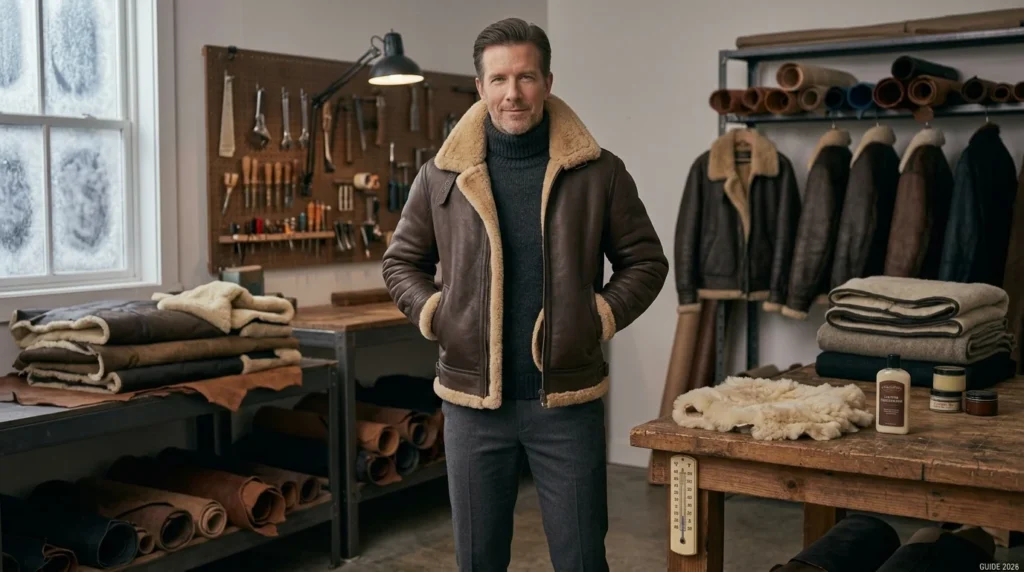
Best leather jackets for cold weather are not defined by leather alone. A warm winter jacket needs the right combination of insulation, lining, coverage, fit and wind protection.
Cold weather changes what you need from a leather jacket. A jacket that feels comfortable on a mild autumn afternoon may not be enough when the temperature drops or the wind picks up. The key is to evaluate the entire jacket, including lining, insulation, fit, coverage, cuffs, collar and how easily it can be layered.
This guide explains how to choose a leather jacket for cold weather, which styles tend to work best, what construction details matter and how to match a jacket to the conditions you actually face.
What Makes a Leather Jacket Good for Cold Weather?
The best leather jackets for cold weather should do more than have a thick-looking exterior. Leather can reduce the effect of wind compared with many lightweight fabrics, but warmth depends heavily on what is inside the jacket and how well the design limits heat loss.
- Insulating lining: Wool, quilted insulation, fleece, shearling or other substantial linings can add warmth.
- Good coverage: A jacket that reaches the waist or below and closes securely can be more useful than a very cropped style.
- Wind-resistant construction: A secure front closure, snug cuffs and a collar that can close around the neck help reduce drafts.
- Layering room: You need enough space for a sweater or other mid-layer without making the jacket excessively loose.
- Appropriate leather weight: A substantial hide can feel more protective against wind and wear, but leather weight alone does not determine warmth.
The most important point is that leather type and insulation are separate considerations. A beautiful leather jacket with a thin lining may be ideal for transitional weather but less suitable for a very cold day.
Best Leather Jackets for Cold Weather: 4 Styles to Consider
1. Shearling and Aviator Jackets
Shearling and shearling-inspired aviator designs are among the first styles to consider when warmth is a priority. Their appeal comes from substantial construction and insulating materials, often combined with a larger collar and a more protective silhouette. They are especially useful if your winter wardrobe already includes boots, heavier denim, knitwear and other heritage-inspired pieces.
2. Insulated Leather Bombers
Among the best leather jackets for cold weather, an insulated leather bomber can be an excellent everyday winter option when it has meaningful insulation rather than a lightweight fashion lining. Ribbed cuffs and waistband can also help the jacket sit securely around the body. This is a practical choice for city wear because the bomber silhouette works naturally with jeans, chinos, knitwear and casual footwear.
3. Longer Leather Coats
A longer leather coat can provide more coverage than a cropped motorcycle-style jacket. Extra length can be useful when sitting outdoors, commuting or wearing the jacket over tailored or layered clothing. When comparing coats, look at the lining and closure rather than assuming that a longer jacket is automatically warmer.
4. Heavy Leather Riding Jackets
For riders, a heavier leather riding jacket can be useful in cold conditions, but a fashion leather jacket should not automatically be treated as protective motorcycle equipment. Riding-specific requirements are different from ordinary winter styling. Some riding designs combine substantial leather with removable liners, vents and protective construction. For example, the Blaise Padded Riding Jacket uses a 1.1–1.2 mm cowhide shell and includes a zip-out inner vest, giving the wearer more flexibility when conditions change.
Leather Types: Which Is Warmest?
There is no universal rule that one leather type is always the warmest. Thickness, lining, construction and garment design can matter as much as the animal hide.
| Leather or material | Cold-weather considerations | Typical character |
|---|---|---|
| Sheepskin | Often used in substantial and shearling-style outerwear; can be soft and comfortable | Soft, insulating potential |
| Cowhide | Can be substantial and wind-resistant; insulation still depends on construction | Firm, durable |
| Goatskin | Can offer a useful balance of durability and flexibility; lining remains important | Supple, textured |
| Lambskin | Lightweight and soft; often better suited to moderate conditions unless specially insulated | Soft, smooth |
Think of leather as the outer shell and the lining or insulation as a major part of the jacket’s thermal system. A lightweight lambskin jacket with a thin lining and a properly insulated sheepskin design should not be expected to perform identically simply because both are genuine leather.
Why the Lining Matters So Much
The lining is one of the easiest details to overlook because you cannot see it while the jacket is being worn. For winter use, however, it can make a significant difference to comfort.
Wool and wool-like insulation
Wool is commonly associated with cold-weather clothing because it can provide useful insulation without requiring an extremely bulky garment. It may appear as a full lining, paneling, collar detail or other construction.
Quilted insulation
Quilting can hold an insulating layer in place and create a warmer structure without requiring a visibly oversized jacket. It is worth checking what the quilting actually contains rather than judging warmth by appearance alone.
Fleece and sherpa
Fleece or sherpa-style linings can add softness and warmth. They are often used in casual winter jackets and can make a leather jacket feel considerably cozier.
Lightweight linings
Polyester, viscose and similar fabrics can provide a smooth interior and make a jacket easier to put on over clothing, but a basic lining should not automatically be confused with insulation. The construction and any additional insulating layer are what determine the cold-weather performance. The Jacket Maker’s material guidance similarly emphasizes that lining selection should follow the intended use, with heavier options such as fur, sherpa and wool being relevant to colder climates.
Check the Collar, Cuffs and Closure
Small construction details can have a big effect on how a jacket feels in cold wind.
- High or adjustable collar: Useful when you want more protection around the neck.
- Zipped or adjustable cuffs: Help limit open gaps around the wrists.
- Full front closure: A secure zipper, buttons or combination closure gives you more control over ventilation.
- Storm flap: Some designs add a flap over the main zipper to reduce exposure to wind.
- Adjustable hem: A drawcord, snap or ribbed hem can help the jacket sit closer to the body.
These details do not turn a fashion jacket into technical expedition clothing, but they can improve everyday winter comfort.
How Much Room Should You Leave for Layers?
A common mistake is choosing a winter leather jacket exactly as you would choose a lightweight autumn jacket. If you plan to wear a T-shirt only, a close fit may work. If you expect to wear a sweater underneath, you need additional room through the chest, shoulders and arms. Do not solve the problem by simply buying several sizes larger. Excessive room can create a poor silhouette and may allow cold air to circulate more easily. Instead, compare your measurements with the jacket’s size chart and consider the garments you realistically wear underneath. A useful test is to put on your normal winter mid-layer before trying the jacket. Zip it completely, move your arms forward, sit down and reach overhead. If the shoulders pull sharply or the sleeves ride up excessively, the jacket may not provide the layering flexibility you need.
Cold Weather Does Not Always Mean the Heaviest Jacket
Your climate matters. A person commuting between heated buildings in a city may need something very different from someone walking outdoors for hours.
| Situation | What to prioritize |
|---|---|
| Mild autumn and spring cold | Medium-weight leather, comfortable lining, easy layering |
| Cold urban commuting | Insulated lining, secure collar and cuffs, sweater room |
| Very cold winter | Substantial insulation, greater coverage, warm mid-layer and weather-appropriate accessories |
| Cold motorcycle riding | Purpose-built riding construction, appropriate protection and flexible insulation |
For genuinely severe winter conditions, a leather jacket should be evaluated as one component of your clothing system rather than your only source of warmth. Base layers, sweaters, trousers, footwear and weather protection all matter.
Features to Look for Before Buying
Before purchasing, ask these questions:
- What is the shell leather and how substantial is it?
- What exactly is the lining material?
- Is there actual insulation or only a smooth inner lining?
- Can you comfortably wear your normal winter mid-layer underneath?
- Does the collar close securely?
- Do the cuffs leave a large opening around your wrists?
- Does the jacket provide enough coverage for how you will use it?
- Are the zipper and other closures substantial and easy to operate?
- Does the size chart provide garment measurements or only generic size labels?
- Are the care instructions compatible with how you expect to maintain the jacket?
Examples From USA Jackets Co
USA Jackets Co carries several leather styles that illustrate why construction details matter. The Alexander Jacket, for example, uses premium Napa leather and includes a lined interior with ribbed sleeves. It is a useful example of a structured everyday leather jacket, although its listed construction should not be interpreted as a guarantee for extreme cold. For a more substantial riding-oriented option, the Blaise Padded Riding Jacket combines cowhide with padding and a removable inner vest. For a lighter fashion direction, the Madeline Asymmetrical Leather Jacket uses genuine leather with a polyester lining and a fully lined interior. It can make sense for everyday styling, but the listed construction is different from an insulated winter-specific jacket.
What About Waterproofing?
For background on leather as a material, see Wikipedia’s overview of leather.
Do not assume that a leather jacket is waterproof because it is made for winter. Leather can tolerate different levels of exposure depending on its finish and treatment, but prolonged wet conditions can damage leather and affect its appearance. If rain or snow is common where you live, check the manufacturer’s care guidance before buying. A jacket that is suitable for cold, dry weather may require more caution in wet conditions.
How to Build a Warm Outfit Around a Leather Jacket
The jacket is only the outer layer. A practical winter outfit can be built in three stages:
- Base layer: Use a comfortable layer that manages moisture and does not restrict movement.
- Mid-layer: Add a sweater, fleece or other insulating layer according to the temperature.
- Outer layer: Choose a leather jacket with enough room and insulation for the conditions.
Then pay attention to the areas a jacket cannot fully cover: neck, hands, legs and feet. A scarf, gloves and appropriate footwear can often make a bigger difference to overall comfort than changing between two similar leather jackets.
Common Mistakes When Buying a Winter Leather Jacket
- Assuming thicker leather equals warmer leather: Insulation and coverage matter too.
- Ignoring the lining: The inside of the jacket can determine whether it works for winter or transitional weather.
- Buying a fashion fit that leaves no room for layers: A winter jacket needs practical movement space.
- Choosing by appearance alone: Check construction details before deciding.
- Expecting one jacket to suit every climate: A mild winter and a severe winter call for different systems.
- Treating a fashion jacket as riding protection: Motorcycle use requires appropriate protective equipment.
Frequently Asked Questions
Are leather jackets good for cold weather?
They can be, especially when the jacket has suitable insulation, a secure closure, good coverage and enough room for layers. An uninsulated leather jacket may be better suited to mild or transitional weather.
Which leather is best for winter jackets?
There is no single winner. Sheepskin, cowhide, goatskin and lambskin can all be used successfully, but warmth depends heavily on thickness, lining, insulation and construction.
Is a shearling leather jacket warm?
Shearling-style construction can provide substantial insulation and is widely associated with cold-weather outerwear. Check the actual materials and construction of the jacket rather than relying on the style name alone.
Should a winter leather jacket be loose?
It should have enough room for the layers you intend to wear, but it should not be excessively oversized. Check shoulder movement, chest room and sleeve length with your normal winter clothing underneath.
Can I wear a leather jacket in snow?
That depends on the jacket’s finish, construction and care instructions. Snow and moisture can be challenging for leather, so follow the manufacturer’s care guidance and avoid assuming that every leather jacket is weatherproof.
What lining is best for a cold-weather leather jacket?
Substantial insulating linings such as wool, fleece, sherpa or other purpose-designed insulation can be useful. The right choice depends on the climate, activity level and desired jacket weight.
Final Checklist
Before buying a leather jacket for cold weather, confirm five things: the leather, the lining, the insulation, the fit for layers and the coverage. Then check the collar, cuffs, closure and care requirements. A well-chosen winter leather jacket does not have to be the heaviest garment you own. It needs to match your climate and your routine. For moderate cold, a properly lined bomber or structured leather jacket may be enough. For colder conditions, look toward insulated, shearling or aviator-style construction and plan the rest of your outfit around layers.
