
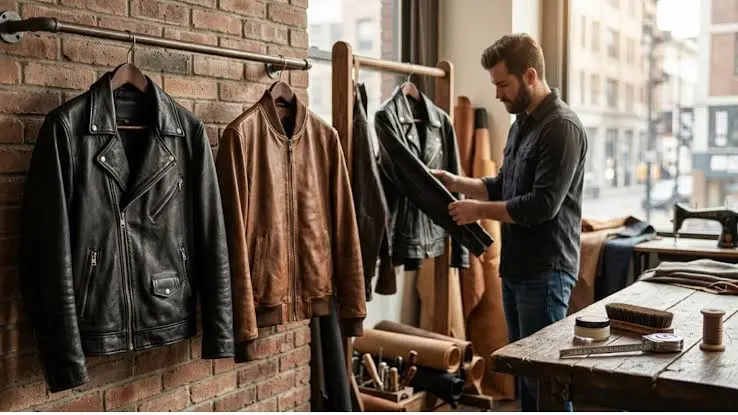
Buying a leather jacket should feel exciting, not confusing. A good jacket can become one of the most useful pieces in your wardrobe, but only when you know what to inspect before paying. Leather type, construction, fit, lining, hardware, care requirements, and seller policies all affect whether a jacket will look better with age or become an expensive disappointment.
This leather jacket buying guide explains the practical checks that help you compare jackets fairly, whether you are shopping online or in person. Use it as a simple checklist before you place an order.
1. Start with the way you will actually wear it
The best leather jacket is not automatically the thickest, softest, or most expensive option. It is the one that fits your routine. Before comparing finishes or brand names, decide how you expect to use the jacket.
- Everyday city wear: a clean racer, bomber, or simple zip jacket is usually easy to style.
- Motorcycle riding: look for a secure fit, durable hide, practical pockets, strong closures, and room for the layers you actually wear.
- Cold-weather layering: prioritize a comfortable cut, a useful lining, and enough room for a sweater without restricting movement.
- Occasional fashion use: you can focus more on silhouette, color, finish, and statement details.
- Travel: choose a versatile color, secure pockets, and a construction that can handle repeated wear.
2. Check what the leather description really means
Leather labels are useful, but they should not be treated as a complete quality score. Terms such as full-grain, top-grain, corrected-grain, suede, lambskin, cowhide, and goatskin describe different characteristics. They do not tell you everything about tanning, thickness, stitching, or finishing.
| Leather type | Typical feel | What to consider |
|---|---|---|
| Full-grain | Natural surface, develops character | Often valued for durability and visible grain; may feel firmer at first |
| Top-grain | Smoother, more uniform | Can offer a balance of appearance, comfort, and durability |
| Lambskin | Light and soft | Excellent drape and comfort; needs thoughtful care |
| Cowhide | Firm and substantial | Useful when abrasion resistance and structure matter |
| Goatskin | Light but resilient | Often a practical middle ground for everyday wear |
| Suede | Soft, brushed nap | Distinctive texture, but more sensitive to moisture and staining |
Ask whether the product page clearly states the leather type, and be cautious when the description only says “genuine leather” without explaining the hide or finish. Genuine leather can be real leather, but the phrase by itself is not a detailed specification.
3. Look at the hide thickness and intended use
Thickness should match the jacket’s purpose. A lightweight fashion jacket can be comfortable and easy to layer, while a riding jacket may need more substantial material and reinforced construction. Neither is automatically better for every buyer.
When shopping online, look for information about weight, lining, and intended use. Product photos can help, but they do not always show how substantial the leather feels. If the site offers a measurement chart or support contact, use it before ordering.
4. Inspect the fit in the places that matter most
A leather jacket should feel close to the body without pulling across the chest or shoulders. The shoulder seam should sit near the edge of your shoulder. Sleeves should reach the wrist or the point where your hand meets the wrist bone, depending on the style. The hem should sit where the design intends, rather than riding up whenever you move.
Quick fit checks
- Zip or button the jacket and raise both arms.
- Reach forward as if holding a steering wheel.
- Check whether the armholes cut into your underarms.
- Wear the layer you expect to use underneath it.
- Make sure the collar is comfortable when closed.
Leather may relax slightly with wear, but it should not be purchased several sizes too small in the hope that it will stretch into the right shape. A little initial firmness is normal; painful pressure is not.
5. Examine the stitching, seams, and panels
Construction is one of the clearest signs of value. Look closely at high-stress areas such as the shoulders, armholes, cuffs, pocket openings, zipper base, and side seams. Stitching should look even and secure, with no obvious loose threads or skipped sections.
Panel layout also matters. Well-planned panels can improve shape and movement, while awkward seams can create pulling or bulk. On a fashion jacket, symmetry and clean alignment are important. On a riding jacket, reinforcement and mobility may matter more than a perfectly minimal appearance.
6. Check the lining and internal finishing
A lining affects comfort, layering, and how the jacket moves over clothing. Look for a lining that lies flat and is attached cleanly at the hem, sleeves, and armholes. If the product page does not show the inside, ask for a photo or confirm the lining details before purchase.
A jacket can have attractive outer leather but still feel uncomfortable if the lining twists, catches on knitwear, or restricts your arms. Internal finishing is easy to overlook because it is less visible in marketing images, but it has a major effect on everyday wear.
7. Test the hardware and closures
Zippers, snaps, buttons, buckles, and adjustment tabs should feel secure and suit the jacket’s use. Open and close zippers smoothly without forcing them. Check that snaps line up properly and that pocket openings are large enough for what you plan to carry.
Hardware can change the entire look of a jacket. Polished metal may feel dressier, while matte or antique finishes often create a more casual or vintage effect. Choose hardware that works with the rest of your wardrobe instead of buying details you will rarely use.
8. Choose the color with your existing wardrobe in mind
Black is usually the easiest starting point because it works with denim, trousers, boots, sneakers, and many casual layers. Brown can feel warmer and more relaxed, especially with blue denim, cream, olive, and earth tones. Tan and lighter shades can look distinctive but may require more care when worn in busy settings.
Think about the colors you already wear. A jacket that matches ten outfits is usually a smarter purchase than a dramatic shade that works with only one look.
9. Review pockets, mobility, and practical details
Count the pockets and consider their position. Can you reach them while seated? Do they close securely? Is there an inside pocket for a phone, passport, or wallet? Are the cuffs adjustable? Does the jacket include a two-way zipper or side tabs that improve movement?
Small details become important when the jacket is worn frequently. Practical design is especially valuable for travel, commuting, and motorcycle use.
10. Read the size chart instead of guessing
Sizes are not standardized across brands, countries, or cuts. Compare the seller’s chart with a jacket that already fits you well. Pay special attention to chest, shoulder, sleeve, and back length measurements.
For online orders, measure over the type of clothing you expect to wear underneath. If you plan to layer a sweater, do not measure only over a thin T-shirt. When between sizes, your preferred fit and the jacket’s intended use should guide the decision.
11. Understand care and weather limitations
Before buying, check how the jacket should be cleaned, stored, and protected. Many leather jackets should not be machine washed, tumble dried, bleached, or ironed. Some finishes need more careful handling than others, especially suede and very soft fashion leathers.
Also consider your local climate. If you regularly face rain, choose a jacket and care routine that match those conditions. A leather jacket is not automatically waterproof, and careless exposure to moisture can change its shape or finish.
12. Check customization, returns, and support
If you are ordering online, seller support is part of the product experience. Look for a clear return or exchange policy, realistic processing times, shipping information, and a way to ask sizing questions. If customization is offered, confirm which measurements can be changed and whether personalized items are returnable.
A trustworthy product page should make the important details easy to find. If basic information is missing, ask before paying rather than trying to resolve the issue after delivery.
A simple leather jacket buying checklist
- Confirm how and where you will wear the jacket.
- Identify the leather type and finish.
- Match the leather weight to the intended use.
- Compare the size chart with your own measurements.
- Check shoulders, chest, sleeve length, and hem.
- Inspect stitching, seams, and panel alignment.
- Review lining and internal finishing.
- Test or research zippers, snaps, and pockets.
- Choose a color that works with your wardrobe.
- Read care instructions before ordering.
- Review delivery, returns, and customization terms.
Frequently asked questions About leather jacket buying guide
What is the most important thing to check when buying a leather jacket?
Fit is usually the first priority, followed by leather type, construction quality, and seller policies. A beautiful jacket that restricts movement or cannot be exchanged is rarely a good purchase.
Should a new leather jacket feel tight?
It may feel close and slightly firm, especially in the shoulders and sleeves, but it should not cause pain or prevent normal movement. Do not rely on dramatic stretching to fix an incorrect size.
Is expensive leather always better?
Not necessarily. Price can reflect leather, construction, design, customization, brand positioning, and service. Compare the actual specifications instead of assuming the highest price guarantees the best choice.
What should I ask before buying a leather jacket online?
Ask about leather type, measurements, lining, care, delivery time, return conditions, and whether the item is made to order. If the size chart is unclear, request garment measurements.
Where should I start if I want a versatile jacket?
A simple black or brown design in a clean silhouette is usually the easiest starting point. Choose a shape that works with your current shoes, trousers, denim, and layering habits.
When you compare jackets using the same checklist, the buying decision becomes much clearer. Focus on how the jacket will perform in your real wardrobe, not only how it looks in a product photo. Explore the men’s leather jacket collection, women’s leather jacket collection, or custom leather jackets when you are ready to compare practical options.
