
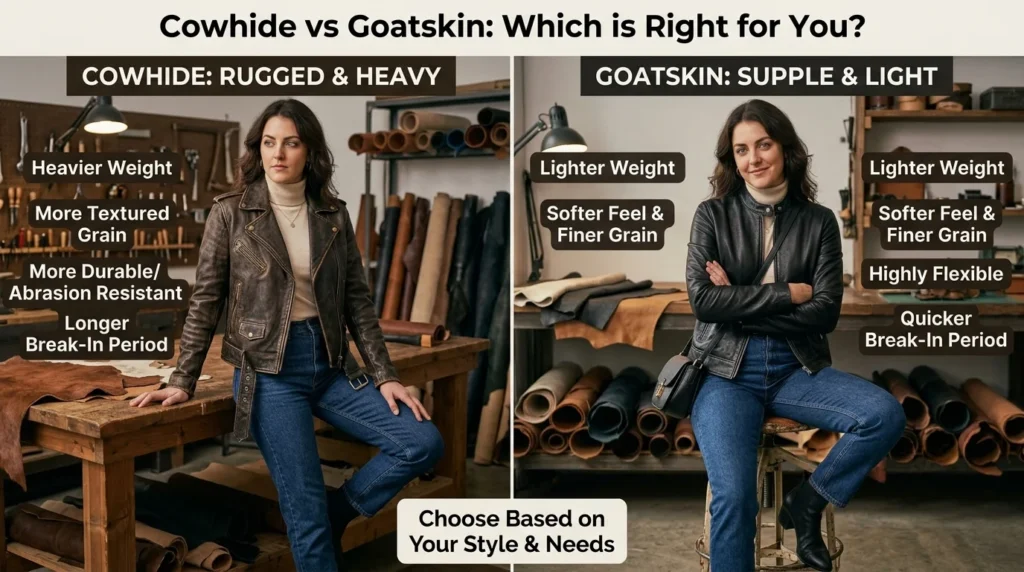
Choosing between cowhide and goatskin leather jackets comes down to more than the name of the animal the hide came from. The leather’s thickness, finish, tanning method, construction, lining and intended use can change how a jacket feels and performs. Cowhide is often associated with a substantial, structured feel, while goatskin is known for flexibility, a distinctive grain and a comfortable balance of weight and durability.
If you are deciding between the two, the simplest starting point is this: choose cowhide when you want a more substantial, rugged jacket; consider goatskin when you want a flexible leather that is comfortable for frequent everyday wear. That is a useful starting point, but the details matter.
Cowhide vs Goatskin Leather Jackets: Quick Comparison
| Factor | Cowhide | Goatskin |
|---|---|---|
| Typical feel | Firm, substantial and structured | Flexible, supple and naturally textured |
| Typical weight | Can be heavier, especially in thick hides | Often lighter and easier to move in |
| Grain | Can range from smooth to visibly textured | Often has a naturally pebbled grain |
| Break-in | Heavier examples may take longer to soften | Often feels flexible sooner |
| Style character | Rugged, heritage and structured | Casual, versatile and textured |
| Good match for | Rugged jackets, substantial everyday layers and heritage looks | Everyday jackets, travel and styles where movement matters |
These are general tendencies rather than guarantees. Two jackets made from the same type of hide can feel very different because leather selection, thickness, finishing and garment construction vary.
What Is Cowhide Leather?
Cowhide is leather made from cattle hide. It is widely used for footwear, bags, belts, furniture and jackets because it can provide a firm, substantial hand. In a jacket, heavier cowhide can create a structured silhouette that feels particularly appropriate for biker, heritage and rugged-inspired designs.
One reason buyers choose cowhide is the sense of substance. A thicker cowhide jacket can feel more structured than a lightweight fashion leather, and it may take time to develop the flexibility that comes with regular wear.
Advantages of cowhide jackets
- Often provides a substantial, structured feel.
- Works naturally with rugged and heritage jacket designs.
- Can offer excellent service life when the leather and garment are well made and properly cared for.
- Can develop character as the jacket is worn.
- Suitable for buyers who prefer a jacket with noticeable structure.
Things to consider
- Heavier cowhide can feel less flexible at first.
- Thick leather may take longer to break in.
- Weight can become noticeable during long periods of travel or frequent movement.
What Is Goatskin Leather?
Goatskin is leather made from goat hide. It is valued for its combination of flexibility, relatively low weight in many jacket constructions and distinctive natural grain. The grain can give a goatskin jacket visual character even when the overall design is simple.
For everyday wear, goatskin can be attractive because the jacket can move more naturally with the wearer. It is often a practical choice when you want real leather without the more substantial feel associated with some heavy cowhide jackets.
Advantages of goatskin jackets
- Often feels flexible and comfortable for everyday wear.
- Can be lighter than a heavy cowhide jacket.
- Natural grain gives the surface a distinctive appearance.
- Works well with casual, travel and versatile jacket designs.
- Can balance durability and flexibility when the leather is properly selected and constructed.
Things to consider
- The lighter feel may not suit buyers who specifically want a very substantial jacket.
- Texture varies from hide to hide and according to finishing.
- Leather type alone does not tell you the final quality of a jacket.
Which Is More Durable: Cowhide or Goatskin?
There is no useful rule that says every cowhide jacket will outlast every goatskin jacket. Durability depends on several parts of the finished garment, including leather thickness, hide quality, tanning and finishing, stitching, seams, zippers, lining and how the jacket is used and maintained.
Cowhide is often selected when a buyer wants a substantial leather jacket, while quality goatskin can provide a strong combination of flexibility and everyday wearability. Instead of judging durability from the hide name alone, inspect the complete jacket.
Which Is More Comfortable for Everyday Wear?
If you wear a jacket for commuting, shopping, travel or long periods outdoors, flexibility can make a noticeable difference. Goatskin can be appealing in this situation because many goatskin jackets have a flexible hand and moderate weight.
Cowhide can also be comfortable, particularly when the leather weight and pattern are matched to the design. The key is to distinguish between a well-designed substantial jacket and one that is simply heavier than you need.
Which Leather Is Better for a Biker Jacket?
The answer depends on what you mean by a biker jacket. For a fashion biker jacket, either cowhide or goatskin can work well. Cowhide can complement a rugged, structured look, while goatskin can create a more flexible everyday interpretation.
For actual motorcycle riding, leather type should not be your only selection criterion. Look at the complete garment, including fit, construction, seams and the protective specifications relevant to your riding equipment. A fashion leather jacket should not be assumed to provide motorcycle protection simply because it is made from cowhide or goatskin.
Cowhide vs Goatskin for Winter and Cold Weather
Leather itself is not a complete insulation system. Warmth depends on the leather weight, lining, layering, fit and whether the jacket has insulation or other cold-weather construction.
A heavier cowhide jacket may feel substantial in cold conditions, but a goatskin jacket with an appropriate lining and layers underneath can also be comfortable. If warmth is your main priority, compare the complete jacket rather than choosing only by hide type.
How Texture and Finish Change the Look
Leather type is only one part of the appearance. A smooth finish can make either leather look cleaner and more understated, while distressed, pull-up, suede or other finishes can create a more casual or vintage effect.
Goatskin is often recognizable for its natural grain, which can add visual depth. Cowhide can range from relatively smooth to strongly textured depending on the hide and finishing process. This means you should look at actual product photographs and specifications rather than assuming every cowhide or goatskin jacket looks the same.
What Should You Check Before Buying?
When comparing two leather jackets, use this checklist rather than relying on the leather label alone:
- Leather thickness: Ask what weight or thickness is appropriate for the intended use.
- Fit: Check chest, shoulder, sleeve and jacket length measurements.
- Construction: Look at seams, stitching, cuffs, collar and stress points.
- Lining: Consider the climate and how you plan to layer underneath.
- Hardware: Check zipper and fastening quality.
- Finish: Decide whether you prefer smooth, matte, distressed or naturally textured leather.
- Care requirements: Understand how the leather should be cleaned, stored and protected.
- Return and sizing information: Review the seller’s measurement and return guidance before ordering.
Which Should You Choose?
Choose cowhide if you prefer:
- A substantial, structured leather jacket.
- Rugged, biker or heritage-inspired styling.
- A jacket with a more pronounced break-in character.
Choose goatskin if you prefer:
- A flexible leather for frequent everyday wear.
- A lighter-feeling alternative to heavy cowhide.
- Natural grain and a more textured surface.
- A jacket that works easily for commuting, travel and casual outfits.
If you want to specify the leather type as part of a particular design, USA Jackets Co’s custom leather jackets service lists multiple leather options, including cowhide and goatskin, alongside other materials and finishes. That can be useful when the leather choice is part of the design brief rather than simply a material preference. citeturn0search0
Frequently Asked Questions
Is cowhide better than goatskin?
Neither is universally better. Cowhide is often preferred for a substantial, structured feel, while goatskin is often chosen for flexibility and a naturally textured grain. The best option depends on the jacket’s construction and intended use.
Is goatskin good for leather jackets?
Yes. Quality goatskin can be a practical jacket leather because it can combine flexibility, moderate weight and natural grain. The quality of the hide and construction still matters.
Is cowhide leather heavy?
It can be, particularly when a jacket uses a thicker hide. However, cowhide jackets are available in different weights, so the actual garment should be evaluated rather than assuming all cowhide is heavy.
Does goatskin last a long time?
Well-made goatskin can provide long-term use when properly cared for. Leather quality, construction, frequency of wear and maintenance all influence how long a jacket remains in good condition.
Which is softer, cowhide or goatskin?
Goatskin is often perceived as more flexible and supple, while cowhide can feel firmer and more structured. Tanning, thickness and finishing can change the feel considerably.
Can cowhide and goatskin both be used for custom jackets?
Yes. Both can be used for custom leather jackets, with the choice depending on the desired weight, flexibility, texture and overall design.
Final Takeaway
Cowhide and goatskin can both make excellent leather jackets, but they suit different preferences. Cowhide is a natural fit for buyers who want structure, substance and rugged character. Goatskin is a strong option for buyers who prioritize flexibility, comfort and natural grain.
Before buying, compare the leather type with the actual thickness, finish, lining, construction and measurements. That approach will help you choose a jacket based on how it will really feel and perform rather than making the decision from the hide name alone.
